
Beth's Bridge
How one death exposed a broken system

‘People I’ve Shot’ tells the stories behind the news. In this week’s post, the death of a courageous mental health care and how it prompted an investigation into private mental healthcare in the UK. I’m Tony Smith - a former BBC journalist with 30 years’ worth of stories to tell! Do subscribe for more each week.
Like many London workers who’ve migrated to Cornwall, I spend a lot of time on the A30. We are at the far southwestern corner of the United Kingdom, a seemingly interminable drive from anywhere, particularly in the summer when the roads are clogged with holidaying caravanners.
And like many here, I mark my journey by known landmarks. Everyone in the county knows, and looks for, the ‘Nearly Home Trees’, a majestic circle of woodland on a small hill just before you cross the border from Devon into Cornwall.
For me, half a mile further on, there’s now Beth’s Bridge and Jess’s Sliproad.
I clock them every time I drive by.
Without fail.
And I ponder, solemnly, what it must have been like on that day – a brief moment of sadness before returning to whatever podcast or radio station is accompanying me on the long drive to or from ‘up country’.
Let me explain this tragic story, then.
It was a story which dominated my working life for six months of 2022.
Imagine, if you will, being a young female police officer. You’re coming to the end of a long, cold night shift, and a call comes in that a person is standing on a bridge overlooking the busy A30 dual carriageway. You’re in a response car and you race to the scene, thoughts of home, and bed, now suspended. When you arrive an ambulance is already there but, with some training in negotiation, you take over. Your colleague runs to close nearby roads. You’re on your own.
The woman on the bridge is Beth Matthews. She’s desperately suicidal, standing over the barrier, a determined look on her face. She is ready to jump, swaying backwards and forwards, eyes fixed on the horizon. And even though the traffic below has been halted, the bridge is terrifyingly high. You talk to her, ask her name, even though you know it already. Beth, at the time, was well known to local officers, having struggled with her mental health for years. In fact, she’d been on this very bridge just two days before – at exactly the same time. But after 24 hours with the local mental health team, Beth has been released. She’s given a lift back to pick up her car, travels home for a few hours’ sleep, and then returns to the bridge. So you’re here with her now, as the sun comes up, the lights from a Tesco superstore twinkling in the distance.
That police officer is PC Jessica Floyd.
I know all this because I interview Jess a year later.
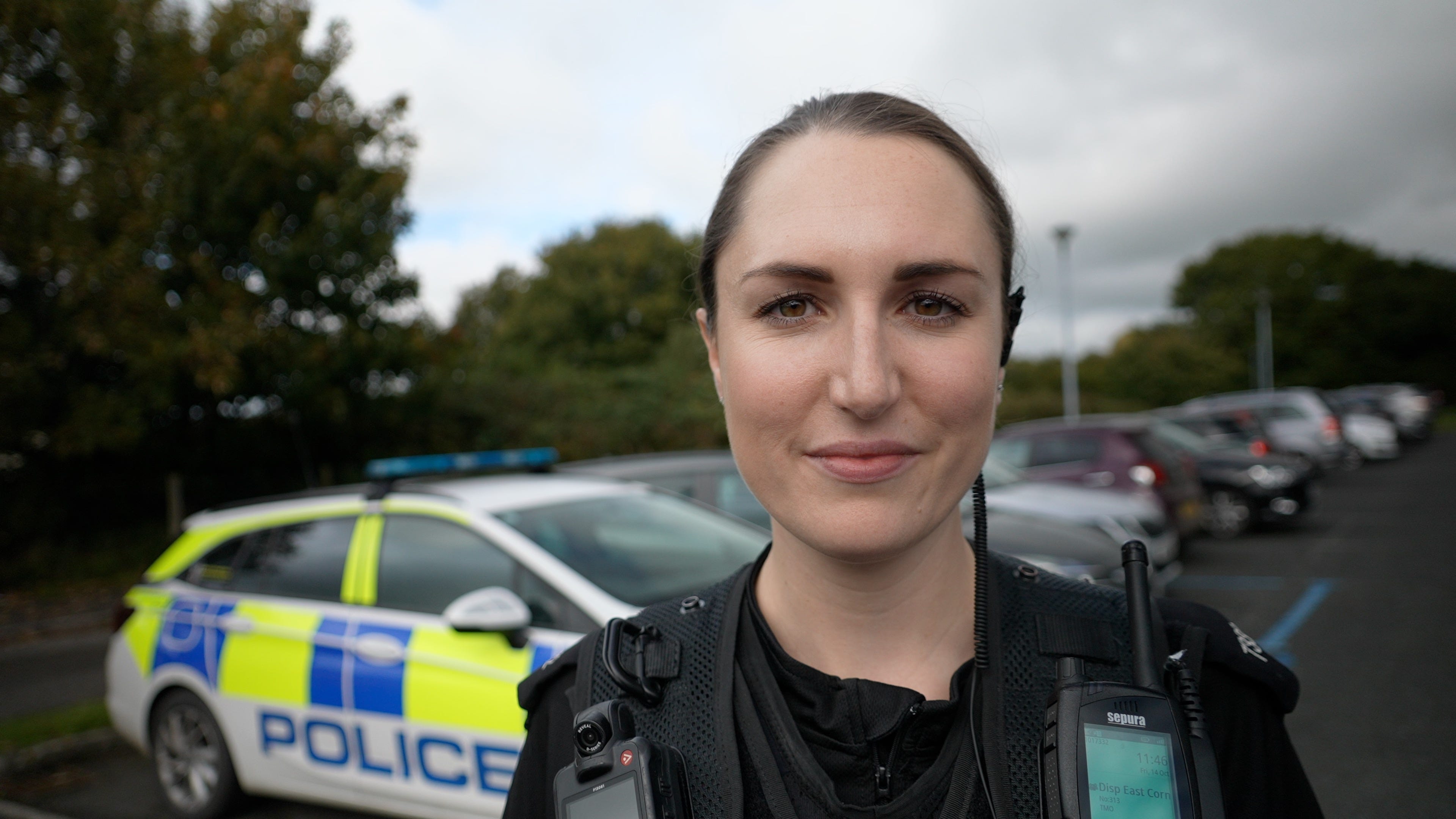
“I’ll never forget that day,” she says. “I even dream about it”.
We’re sitting in a small office in the back of Callington police station. The station is little more than a Portakabin, and we’ve been offered the tiniest space possible for our interview. So all I can do is frame the shot as a big close-up of Jess’s face – the emotion and the memory starkly evident in her eyes.
Because, of course, Beth did jump.
Jess tried to talk her down but ultimately failed – and that’s something she lives with to this day. I haven’t seen the moment of the jump. I didn’t want to. It was deliberately edited out of the bodycam footage supplied by Devon and Cornwall Police for our documentary. But I do see Jess screaming “she’s jumped”, turning and frantically racing down the sliproad to the dual carriageway below.
“We laughed about it afterwards,” Jess says. “I could have just run down the bank, but I ran down the road instead. I think it was the longest run of my police career. It went on forever.”
And it does. I watch on the bodycam as Jess runs and runs. She sounds terrified of whatever she’s about to find. And she probably was. It is one of the most dramatic bits of footage I’ve ever seen.
But Beth survived that jump.
“I got there. She was alive. She was breathing. She was screaming. And I just held her hand. It was all I could do,” she tells me.
I later wrote about Jess on Twitter, describing her as an absolute hero. Imagine going to work and having to deal with something like that. Our frontline police officers do so every single day.
Beth was airlifted to Derriford Hospital with catastrophic injuries. It was touch or go whether she would survive, her pelvis, legs, much of her body all in pieces.
But she did survive – because she was a fighter.
And she made a decision which would eventually bring me into her life, to write about her experiences.
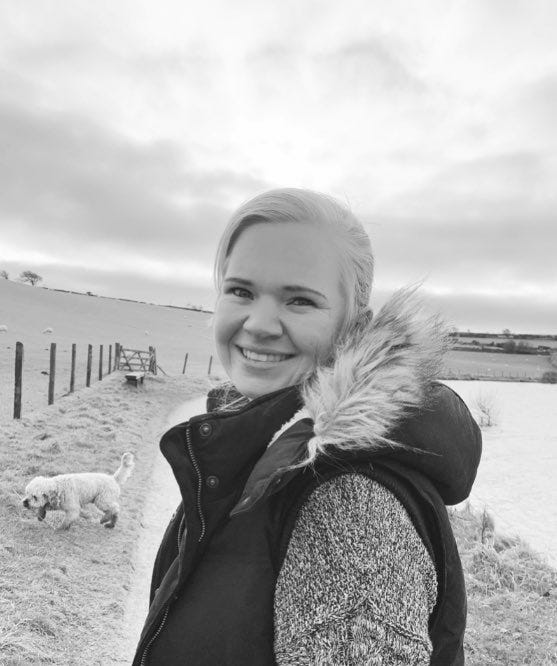
Beth’s blog and her Twitter were followed by tens of thousands of people, many of whom were also struggling with their own mental health. Beth’s writing – it’s still up today, you can read it – has a raw and unvarnished honesty which resonated deeply with those who followed her.
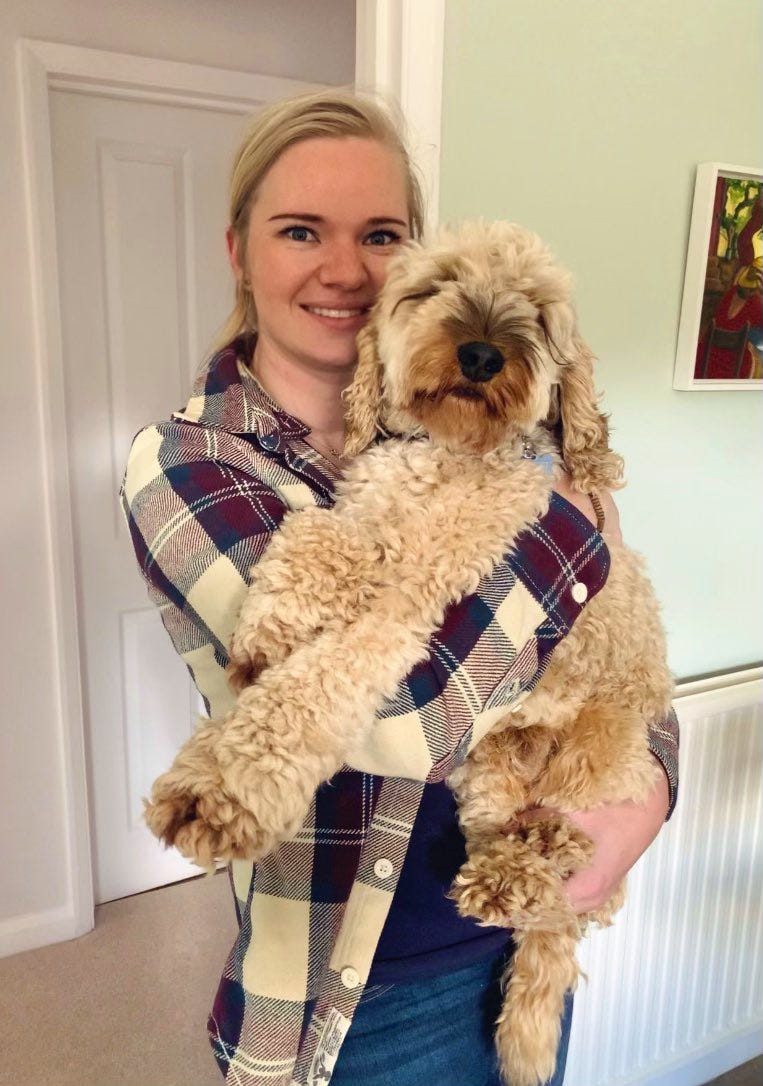
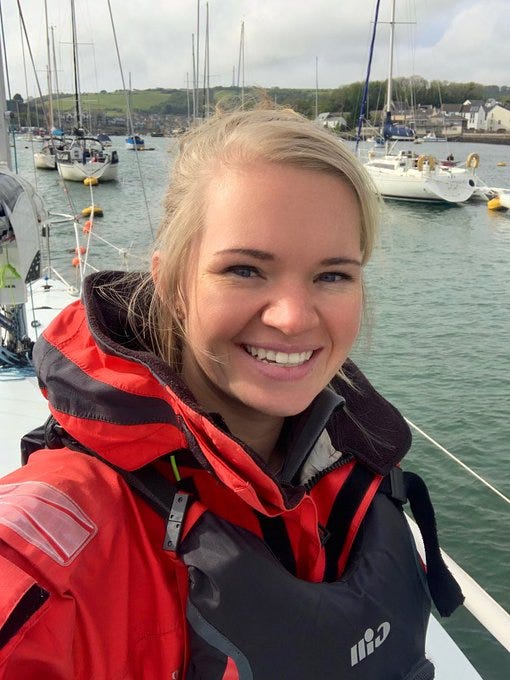
After months of physiotherapy she left hospital and set about rebuilding her life. There are photos of her on Twitter, standing on a paddleboard (she had once been a successful competitive sailor). Her smile is infectious.
The story should have had a happy ending.
Fast forward a year or two and I’m standing outside the Priory Cheadle Royal in South Manchester. It’s drizzling, and we’re trying to film some piece to cameras. A young woman comes out of the gate, approaches us and says: “I hope you tell people what it’s really like in there.” It’s what we’re trying to do, we say. We ponder interviewing her – she’s on a specialist eating disorder ward and allowed out from time to time – but decide we might be accused of inappropriately hassling vulnerable people (though she is very keen to talk).
Beth’s story leads here, then, to an old Victorian asylum building, home to around 140 patients paid for by the NHS but cared for by a private company. Priory Group is the largest single provider of mental health care to the NHS and Cheadle is its largest hospital.
“We thought she’d be safe there” Beth’s sister tells us, in a long and sometimes emotional interview.
But Beth wasn’t safe.
Still struggling with her physical injuries from that bridge jump, her mental health had gradually deteriorated again. Eventually she’d been sectioned and, after a spell on a psychiatric ward in Bodmin, the family got funding for specialist treatment at the Priory. Beth had been optimistic at the time. This was a chance to get better.
“I’m going to seize this opportunity with both hands” she wrote on Twitter. “I’ve been given a second chance at life”.
But hundreds of miles from her family and her partner, cut off from visitors when Covid hit, the Fern Ward in Cheadle was not the fresh start she’d hoped for. What happened next is why I’m now standing outside these moss-covered walls.
“Astonishingly, Beth Matthews was able to order a poisonous substance online, have it delivered to her secure ward, and swallow it in front” the correspondent I’m working with talks to camera.
And that’s what happened.
Reporting suicide of any kind is incredibly difficult. There’s the possibility of sensationalizing, even idolizing celebrity deaths. Or it can feel horribly intrusive. Samaritans guidelines make clear that reporting a method of suicide can be dangerous – because others will seek to copy that method. So we’ve worded this piece to camera carefully. We’re not saying what substance Beth consumed, or what website she was able to order it on (a well-known forum where members share tips on how to die - it’s horrific).
That Beth was able to access this site and order this substance while in a secure mental health ward is incredible in itself.
That she was allowed to open her own post (despite a care plan saying she shouldn’t) and consume this substance while on 2:1 supervision is astonishing.
And that staff on her ward, even senior psychiatrists appeared to have no idea this website existed, or that this substance was a well known form of death, beggars belief – at the inquest into Beth’s death we heard that there was a long delay phoning an ambulance while staff used Google to establish what she might have taken.
So Beth – a well known mental health blogger whose writing helped thousands of others - shouldn’t have died. And her family hold the Priory Group responsible.
That’s the story we work on for the best part of six months, putting together a documentary on Beth’s remarkable life in which we interview not just Jessica Floyd, but also some of the people touched by her blog. One man tells us that Beth quite literally saved his life. He had been looking for a method to take his own life, stumbled on her blog and decided that “if Beth can get through it, so can I”. We film him bringing flowers to lay at her grave.
Our first story airs at the end of Beth’s inquest – it’s January 2023 and we scramble to edit in the back of a hire car, the streets outside Stockport Coroner’s Court covered in snow.
Within hours of that story going live, we’re being contacted by others with experiences of Priory Group – former patients tell us of the apparent lack of care on the wards, former nurses and healthcare assistants tell us of the lack of training and support and we receive one email from a former senior manager.
She won’t talk on camera, but we have many conversations on the phone and agree to quotes we can use to tell her story. She says that Priory Head Office cared only about money – there was constant pressure on hospitals to increase revenue by filling beds and reduce costs. As a result, she says, the hospital where she worked was “not safe”.
The testimony of this ‘whistleblower’ leads, as you can imagine, to many conversations with our lawyers. There is a brilliant legal team supporting journalists in BBC News – and with this story we’re going to need all the help we can get. Of course we can’t prove some of what our whistleblower tells us, but we argue that it is in the public interest to raise her concerns. Initially, we put those concerns to the Priory Group, asking for an interview. They come back with a thirteen page letter from a top London law firm refuting everything, in great detail. We have something of a wobble. Is our whistleblower telling the truth? Or is she just a disgruntled former employee with an axe to grind? It’s impossible to know.
But the weight of evidence keeps growing. We find more former staff who agree – the pressure to fill beds led to patients being admitted that the wards simply couldn’t cope with. A healthcare assistant agrees to be interviewed on camera – which really helps us.
And then, through a trawl of LinkedIn, we find another senior hospital manager who left the Priory Group fairly recently. They agree to talk – again anonymously – and back up everything our first whistleblower has said. They tell us the financial pressures worsened after the Priory Group was sold off to a private equity company.
We look further into this and learn that Priory Group, a company that was then receiving £600 million from the NHS a year, was acquired by the Waterland Private Equity group in early 2021. Waterland then sold the property estate to an American company – which now has a guaranteed rental income from the NHS. Waterland is run by a superyacht-owning, Monaco-based billionaire businessman, Robert Thielen. We learn that Thielen is a Conservative party donor – he gave £50,000 in 2016.
The Priory Group insists that its hospitals remain among the safest in the UK, successfully treating tens of thousands of patients each year and saving very many lives.
Other private providers of mental health care have faced criticism and scandal too, as have some NHS facilities. Numerous reports have found high staff turnover, low pay and a sector that appears to be at breaking point.
Our mental healthcare system seems broken.
As broken as Beth’s body, lying crumpled on the A30 that day.
But we’ve done something to expose things and I hope it makes a difference. “This reporting matters” the Chief Executive of a leading mental health charity tells us.
We put together a powerful report about the failings of Priory Group and the testimony of our two whistleblowers.
On the day it runs I receive a text from our first whistleblower.
“Amazing” she says. “I feel proud today. Thanks for sticking with it”.
And I start the journey home from London, eventually passing under Beth’s bridge and past Jess’s sliproad once again.
I think of them then, as I do now, every time I make that journey.
I probably always will.