
Blown Off Course
The Typhoon that stole our story

This is ‘People I’ve Shot’, stories from my 30 year career with BBC News. In the news business, we often have to cover breaking stories. That’s fine, except when you’ve got a carefully planned filming assignment all set up. And it’s even worse when it happens as you touch down in a foreign country.
We are literally blown off course by a typhoon.
We land in Manila just as the storm hits.
It’s raining as we emerge from the airport and, as our phones eventually connect to the local telephone network, we’re met with a barrage of texts, emails and missed calls.
I’m travelling with correspondent Angus Crawford and we’re here to make a feature story about the abuse of children online. It’s an important and shocking tale: Filipino children, boys and girls, are now being offered for sale online, with webcams used to livestream their abuse to paying customers in the west.
But as sometimes happens, the news agenda has other ideas.
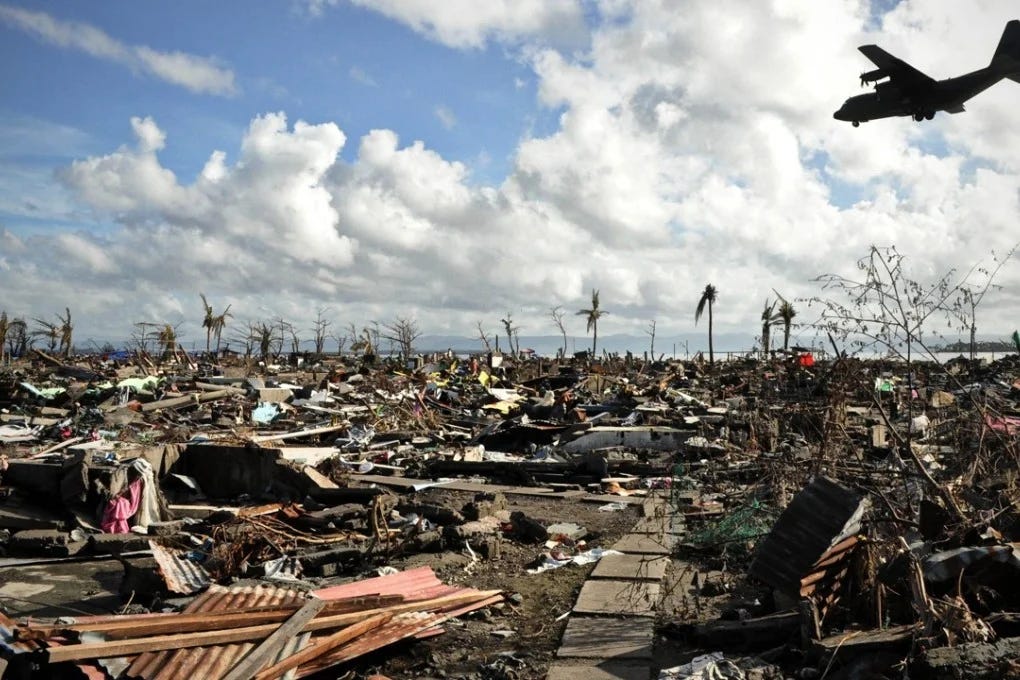
Those texts and emails tell us that Typhoon Haiyan has made landfall and caused devastation in the Philippines. With only a small local bureau, we’re being asked to drop everything and help cover this breaking news.
But Angus and I have put a lot of time and effort into setting up our online abuse story, so this is complicated. Unpicking those plans, cancelling interviews, letting down contributors isn’t easy, and we’ll still be expected to produce something from our original story, having spent a large chunk of BBC cash flying here.
In the end, after numerous calls to the foreign desk, a compromise is reached.
Angus will stay in Manila and help cover the typhoon. It’s a big story after all.
And I’ll continue with the original planned filming, travelling north to Angeles City, where we have interviews set up with NGOs rescuing children from so-called ‘cybersex dens’.
Our driver has met us at the airport, so I take that vehicle and travel onward through driving rain. Meanwhile Angus heads off to a hotel near the BBC bureau in Manila.
He spends the next two days reporting live on the natural disaster unfolding in Tacloban, where thousands of people are dead and hundreds of thousands homeless. There’s talk of getting him down to the area, but in the end his reporting consists of two-ways from a hotel bedroom, largely being fed information from London. The fact that he’s in the Philippines makes very little difference to the reporting. But of course the audience doesn’t know that. And ‘Angus Crawford joins us with the latest from Manila’ sounds so much better.
I continue without him, but it’s hard working alone.
First off, I’m due to meet an Irish priest who has set up a refuge for street children and those rescued from the sex industry. Angeles City is something of a magnet for vice, largely because of the existence here for many years of a large American air base. The air base may have transferred to Filipino hands, but the main street is still lined with strip clubs and brothels.
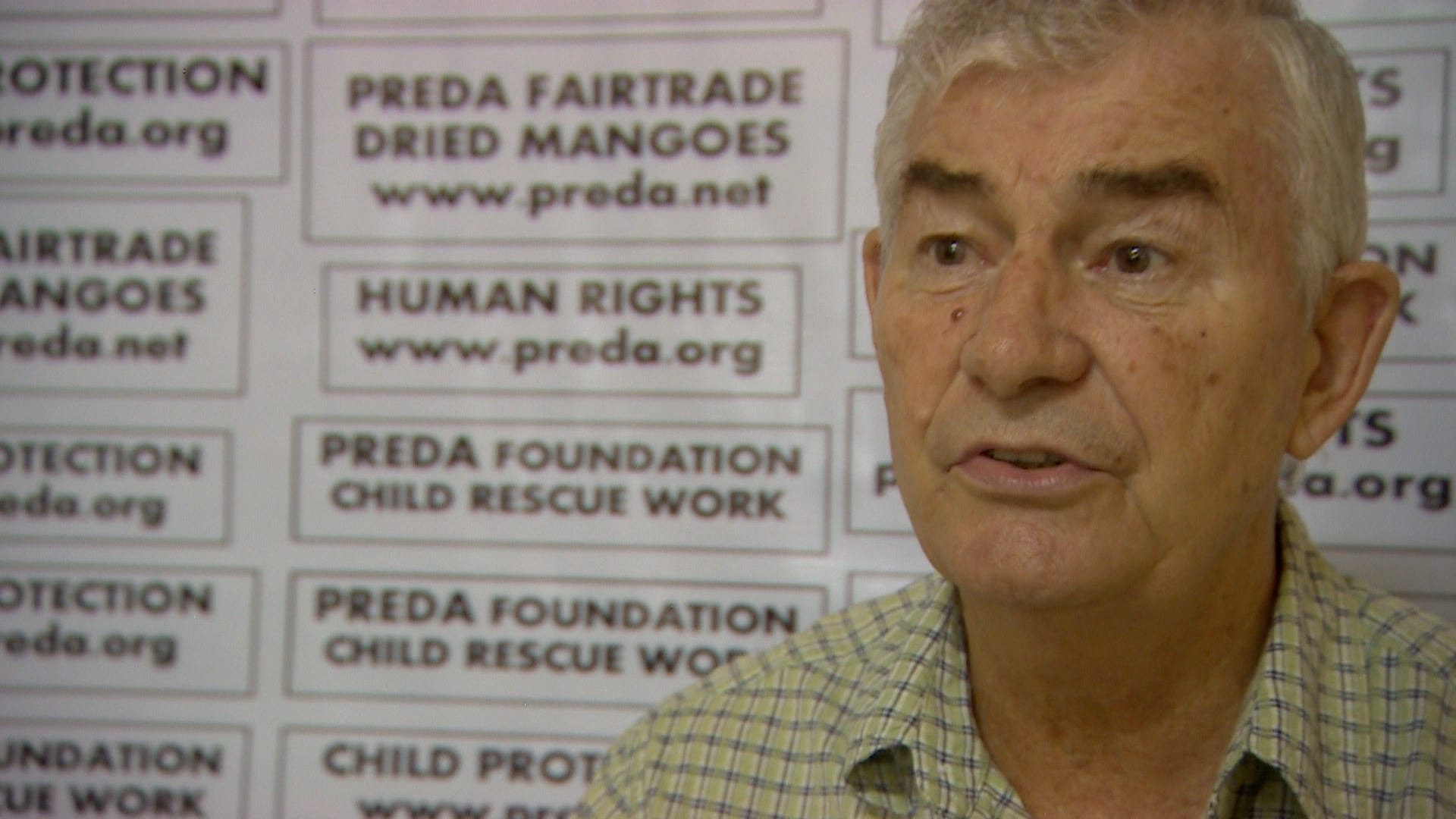
Father Shay Cullen has been here since those early days. I actually filmed him while travelling and freelancing some twenty years back. And he’s barely changed: dedicated, determined, courageous, but also a little cantankerous.
I’m greeted at the refuge he runs by a bundle of kids running round playing, some who’ve been rescued from the exact same abuse we’re reporting on. But Father Shay is rightfully protective and doesn’t want me to film them. I begin to wish that Angus was here to help persuade him. There are usually ways to film anonymously after all.
In the end, Father Shay agrees to an interview, but insists on doing so in front of a hoarding advertising fair trade mangoes that the refuge sells to raise funds. Again, I wish Angus was alongside me. The interview location looks slightly strange, given the seriousness of the subject, with the words ‘Fairtrade Dried Mangoes’ prominent over his shoulder. A walk-and-talk with Father Shay and Angus chatting together would be so much better.
So I crack on, cobbling together what I can, postponing essential filming until Angus can reach me.
Next day I get a call from the Newsdesk telling me I’m also needed on the Tacloban story. There’s talk of me flying out to join an American aircraft carrier which has been sent on a humanitarian aid mission. But in the end that plan goes away and I’m asked instead to team up with another BBC correspondent who’s just arrived in the region, Rajini Vaidyanathan.
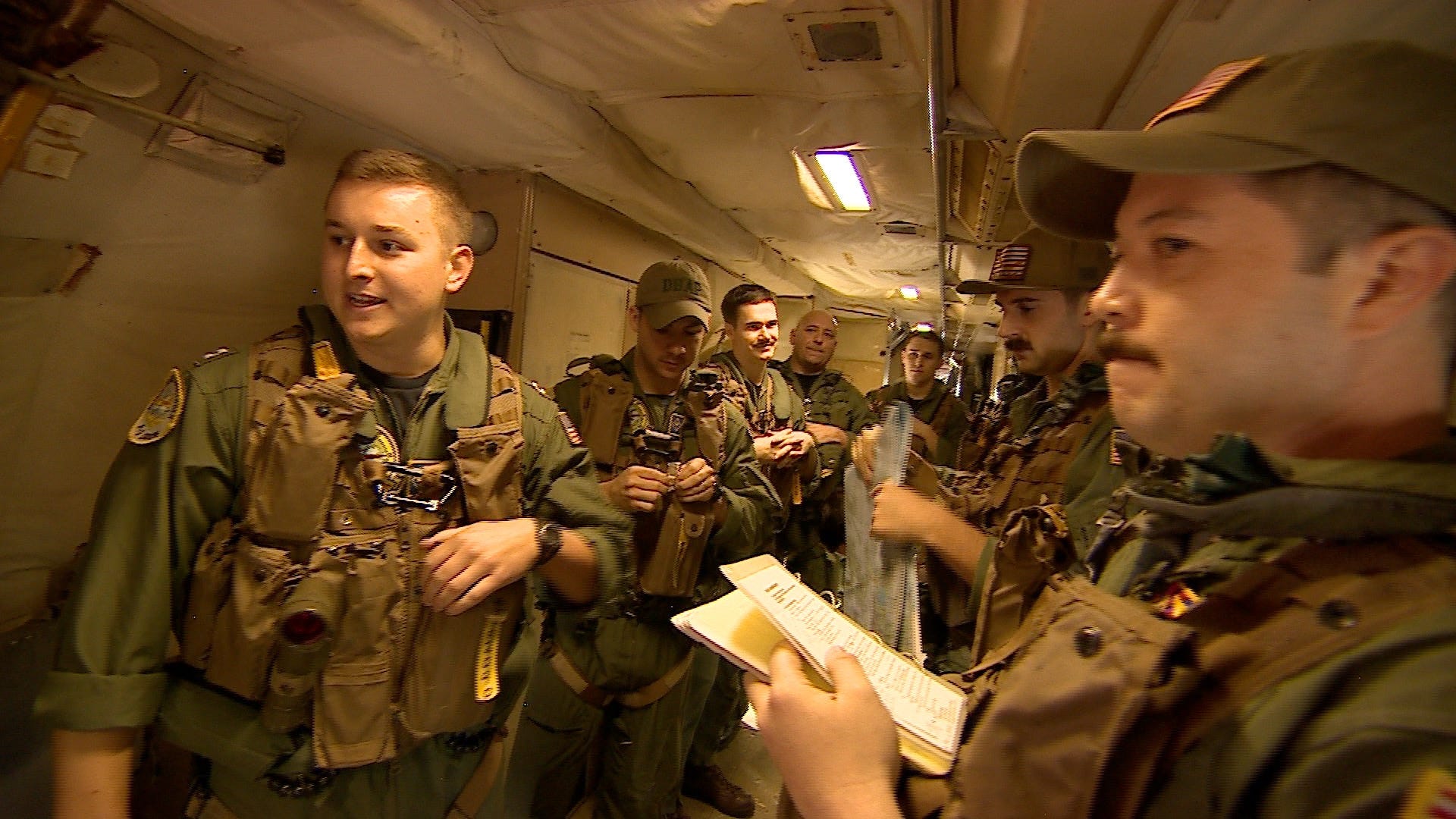
Rajini arrives the next day and we’re tasked with spending the day with the US Air Force who are back at their old base in Angeles City, flying reconnaissance flights over outlying islands battered by the typhoon.
It all sounds quite exciting.
It really isn’t.
We take off around 7am with a decent bunch of US airmen, all in good spirits, glad to be helping with the relief effort. It’s a large military plane, probably with seven or eight crew on board, kitted out with huge amounts of electronic surveillance kit which I’m told I’m not allowed to film. The crew themselves are halfway through a six-month deployment in Asia and most are growing matching handlebar moustaches. It’s something they say they do as a team whenever away from home, mostly to annoy their wives. They’re a great bunch.
But this soon turns into the most boring day imaginable.
Their task is to fly high, in intricate lines, mapping and photographing the landscape far below, for eight hours.
I film the cockpit.
I film mapping equipment, the few screens that aren’t off limits.
We interview the crew.
Rajini does a piece to camera.
This all probably takes around 45 minutes.
And then we sit back and spend the rest of the day flying back and forth.
Through the windows of the aircraft I can just make out the landscape below, trees torn out of the ground like matchsticks. But this is as close as I get to covering this natural disaster.
Back on the ground, eventually, we edit and feed a cut story and Rajini heads back down to Manila.
BBC teams have flown in from all over Asia, so Angus and I are now surplus to requirements. I feel a little frustrated. Having been so close, yet so far, from a big story, it’s frustrating to return to our original feature. I’d like to be on that American aircraft carrier, or helicoptering into Tacloban itself with relief supplies. But other BBC crews get that gig.
Angus turns up the next day and we try to reconstruct our original plans, though everything is now three days behind schedule.
Logistics are always half the battle, of course. The first problem is that Angus’s hotel booking has been cancelled and the place I’m staying is full. In fact, all of the decent hotel options are now full, largely because the American military is using Angeles City as a base for relief flights, with more crews arriving by the day.
Angus ends up in a hotel close to the red-light district. All glass and shiny black metal, there are condoms in the bins and a mirror on the ceiling. He is so terrified of marauding Filipino hookers that he literally barricades the door.

Picking up the pieces of our story isn’t easy. We manage to do some filming around the bars of Angeles City, but it’s not an easy place to work. We’ve been promised a police raid, but it doesn’t happen, and we’re forced to buy footage of a previous raid from a local broadcaster instead. A couple of interviewees drop out. It’s frustrating.
Eventually, late in the day, we have a breakthrough. One of the reasons we’re doing the story now is that a British man, Timothy Ford, is due to go on trial in the UK for directing webcam abuse of Filipino children. We’ve been told where his victims live.
An NGO requests that we don’t go there.
The victims are, they say, being properly looked after.
Of course, we go looking.
And when we do so, we find no indication that the victims are getting any help or support from the authorities whatsoever. In fact, they’re probably in danger of being exploited again.
We travel south, to another part of the country, and find a refuge similar to that run by Father Shay. Here, they’re more accommodating, and allow us to film a few anonymous shots of the children. I do so, very conscious not to traumatise them further.
And in the end, we cobble together a decent report.
We never made it to Tacloban.
We never got our police raid.
And Father Shay’s fair-trade mangoes ended up on the cutting-room floor.
But after a week of cancelled plans, military aircraft and improvised reporting, we still managed to tell an important story.
Sometimes that’s about as much as you can hope for.