
Champagne and Canapés
Undercover on the Queen Mary II

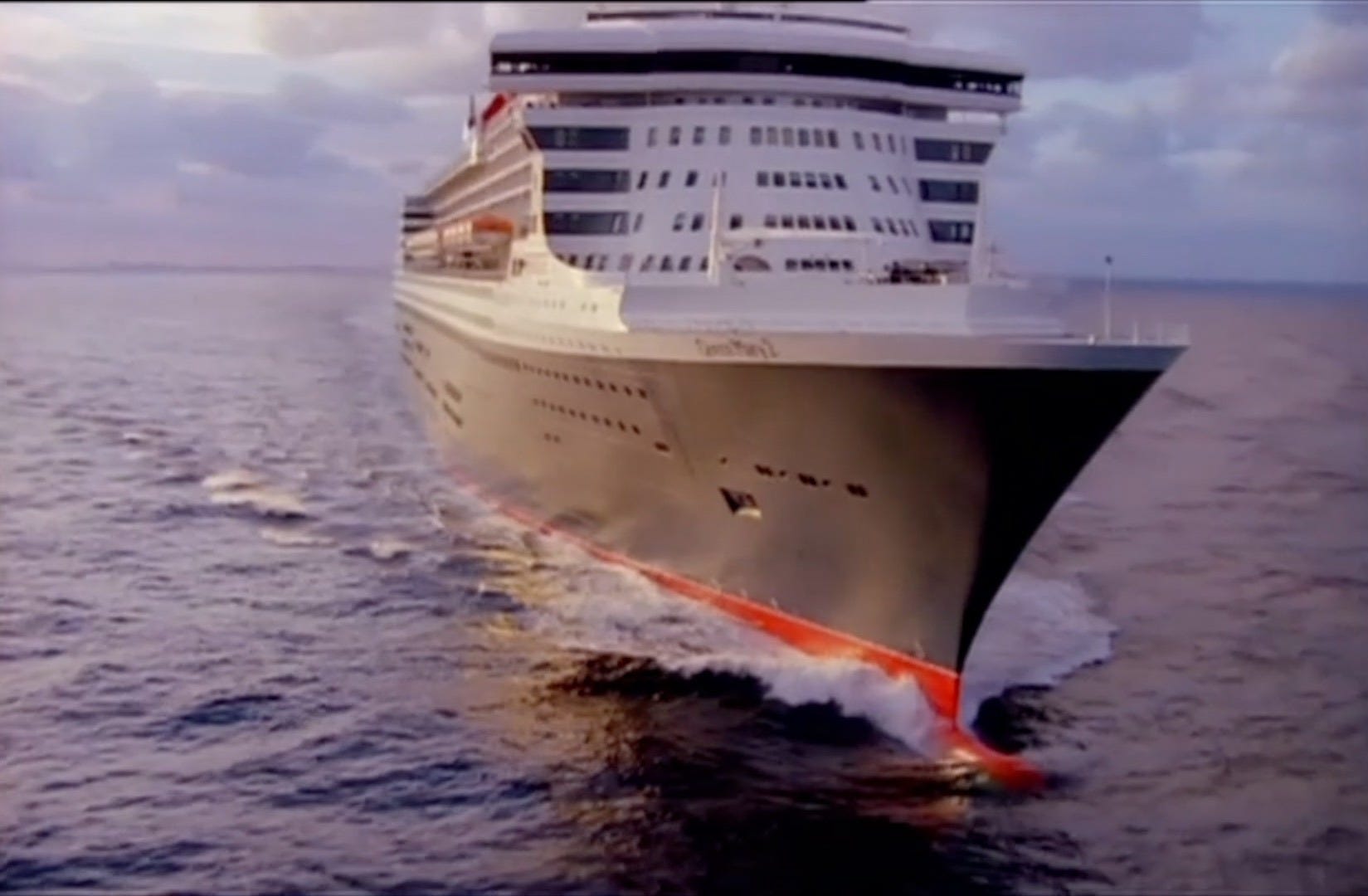
How do investigations come about? Answer: in the unlikeliest of ways. But, as this story shows, even the strangest of leads might be worth following up. This is ‘People I’ve Shot’ - stories from behind the scenes at BBC News. I use this particular one as an example in an ‘Investigative Journalism Masterclass’ for university students. I hope you find it interesting.
It started with a tip-off.
The best investigations always do.
An insider.
A whistleblower.
I’m sitting at the Planning desk of our old base in Television Centre when my boss calls me over and shows me an email. It’s from the Czech Republic, written in broken English and has been sent to a BBC World email address. It makes little sense but seems to suggest that the Queen Mary II, Cunard’s newly launched flagship cruise ship, is a fire risk.
Generic BBC email accounts get a lot of random correspondence like this. They usually turn out to be hoaxers, fantasists or complete fruitcakes. So I’m a little sceptical. But I’ve been asked to check it out and I set about trying to do so.
I’m currently paired with correspondent Tim Samuels to work on anything ‘special’ for the main Six and Nine O’Clock News bulletins. Tim has just won a ‘Young Journalist of the Year’ award and is seen as an up-and-coming star but, without a specific brief, he and I have been bouncing around various different issues and stories. This one feels as random as it gets.
The writer of the email runs a small Czech plastics business and says he made the bathrooms for the Queen Mary II. This, in itself, seems unlikely so I check out his company website, Facebook page and anything else I can find. All appear credible.
The email goes on to explain that the manufacturer is in dispute with Alstom, the French industrial giant commissioned by Cunard to build the ship, and hasn’t been paid. This rings alarm bells. The evidence of whistleblowers tends to be a little suspect if they have an axe to grind.
But the website looks genuine, the company checks out and we arrange a time for a phone call.
His lack of English and my non-existent Czech make the conversation difficult, but he seems to be claiming that Alstom cut costs in the procurement process, insisting that he use cheaper plastic mouldings that weren’t fully fire-resistant. When he complained about this, the dispute began, he says, leading to the disagreement over money owed. It’s further complicated by the fact that the Czech company was part of an outsourced contract from a Polish company that built the majority of these allegedly defective bathrooms.
It might all be true. It might not. It’s very hard to tell.
If true, it’s a good story. The Queen Mary II has only just launched amid much fanfare, costing £500 million to build.
Tim and I don’t have much else on, so we persuade our editor to stump up the funds for a low-cost airline flight to Prague and, before we know it, we’re in a taxi on the way to a plastics factory on the city’s outskirts.
Bizarre how stories come about, right?
The factory itself is a small modern unit on an industrial estate that could be anywhere in Europe. The owner greets us at the door, inviting us in to see both paperwork with Alstom and examples of the plastic mouldings themselves. They’re the kind of large, full-scale units used to fit out bathrooms in a Premier Inn, essentially the whole bathroom moulded into plastic, including the sink and shower, with space for a toilet and holes for plumbing. They look full spec, but the owner insists that they’re not, that the materials used weren’t right. He’s angry about it and gives us an interview.
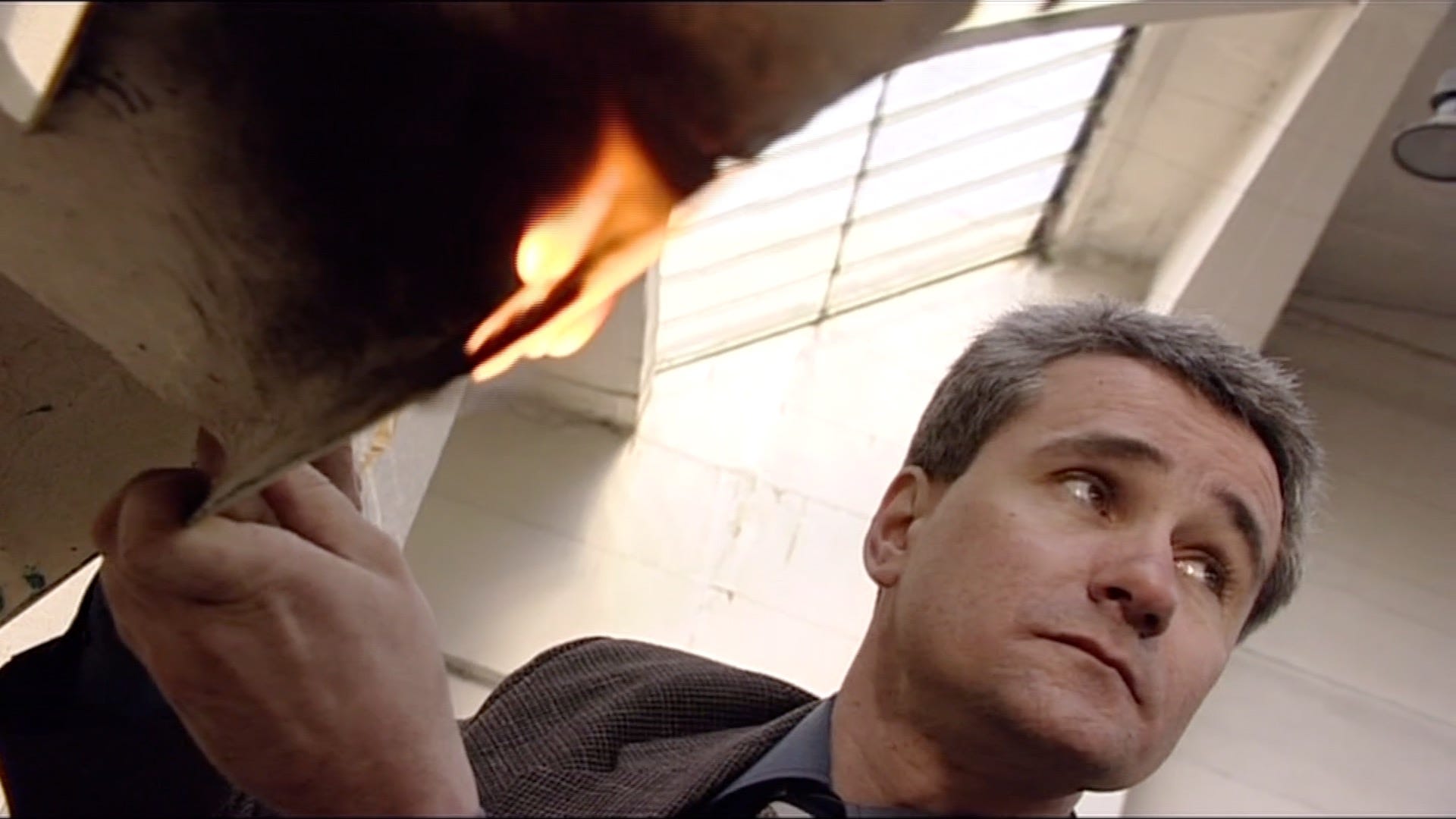
Before we leave, he cuts off several pieces of plastic from one of these bathroom units for us to take home. He burns one of them to show how allegedly flammable it is.
Back in Television Centre, I spend the next two days trying to read up on the specifications necessary in shipbuilding. They’re all online, absurdly complicated, and I know nothing about the fire-retardant properties of different plastics.
The Alstom paperwork is no help either. It’s all in French, with notes scribbled in Polish. And there doesn’t seem to be any kind of ‘smoking gun’. I’m looking for a sentence where they say “do it cheaper and we don’t care about the fire risk”, but I don’t find it.
I need to find an expert.
Thankfully, Google works wonders and I identify a firm specialising in testing plastics, just outside Warrington. On the phone, they appear experienced and knowledgeable, rattling off all kinds of regulations required by the Maritime and Coastguard Agency. I’ve told them I’m investigating a ship which might not be compliant, but I haven’t told them which ship. They sound deeply sceptical, virtually certain that any reputable shipbuilder would comply with the rules. It’s a heavily regulated industry, one in which corners just aren’t cut, they say.
Tim and I make an appointment to show them one of our pieces of plastic and have it tested, and the next day we’re on the motorway.
In their lab, the plastic is attached to a monitoring unit and I set up to film safely behind a flameproof screen. We’re all given safety goggles and a Bunsen burner-type gas flame is applied to our small piece of plastic moulding. A timer is started.
And it burns.
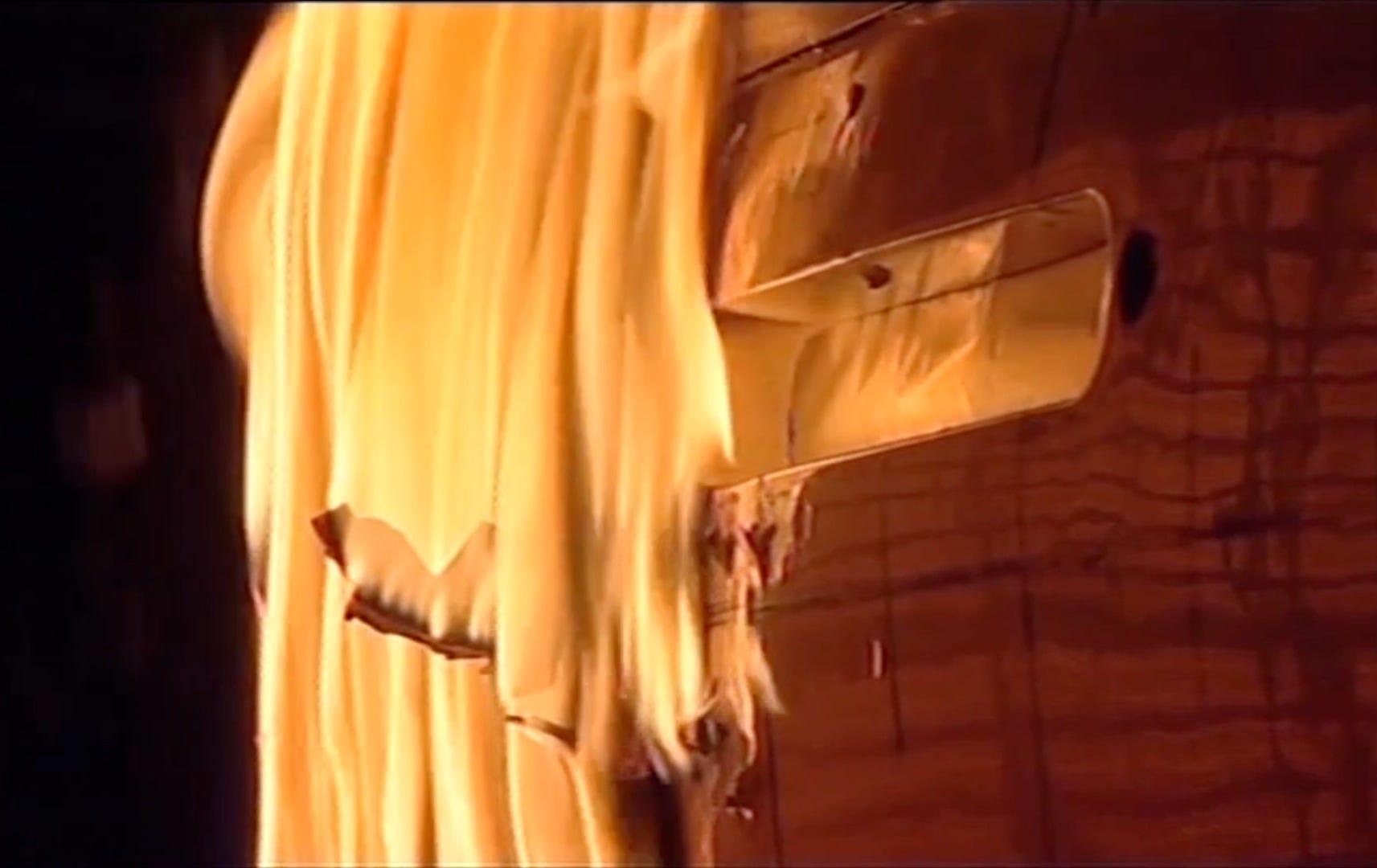
It doesn’t go up immediately, but it definitely catches alight and burns, flames travelling gradually up the plastic.
Our expert raises an eyebrow. He didn’t expect that, he admits. It shouldn’t do that. And we’re right, it shouldn’t be in a ship.
“Which ship is it in?” he asks.
We tell him.
And he gasps.
It looks like we have a story after all.
We return to Television Centre not quite agog with excitement, but definitely more positive than we had been a few hours earlier. Our expert has been sworn to secrecy and we have to work out what to do next.
Next morning, I find Tim at his desk, adamant that we’ll need to go on the ship itself and looking online at the Cunard brochure. There are cruises to New York, the Caribbean and South America, all costing tens of thousands of pounds. But there’s also one to the Mediterranean, coming up in a few weeks’ time, which is considerably cheaper.
We knock on the door of Jon Williams, then the BBC News Home Editor. It’s one of those glass cubicles typical of newsrooms. Jon can be a little volatile and the outcome of meetings tends to depend on the mood he’s in, but I know he’s keen to find projects for Tim to work on, and this could be something that gets ‘picked up’ by the papers.
“How much is it going to cost?” he asks.
We tell him. Two cabins on the Queen Mary II, travelling around the Mediterranean comes to…
You can imagine, it’s quite a lot of licence fee money. And I think Tim might have pitched the price of a cabin with a balcony too (always one to chance his luck).
“One room. Shared. Cheapest cabin possible. And you can do it,” Williams replies. And with that, we’re booking our tickets.
Three weeks or so later and we’re at Portsmouth Harbour station, where a fleet of taxis ferry Cunard guests to the waiting ship. Neither Tim nor I have ever been on a cruise in our lives. There’s a quayside check-in desk, rather like at an airport, where passports and tickets are scrutinised and our baggage checked in, to be taken by some unknown person to our cabin. We’ve managed to secure a twin room, but I’m still smarting somewhat at having to share.
No matter.
In my bag, I have a small handheld camera which could pass for a domestic camcorder. Crucially, we haven’t yet told Cunard or Alstom what we’re doing and so we are posing as tourists. The dress code and joining instructions are quite specific and we’ve had to pack dinner suits for the first night’s formal dinner. I’m slightly dreading it.
On board we take a drink from the bar, hoping that Jon Williams will push through the somewhat eye-watering cost on expenses, and we head for a rear deck. It is a beautiful summer evening and we set sail, a band playing ‘Rule Britannia’, other travellers bathed in golden hour sunlight.
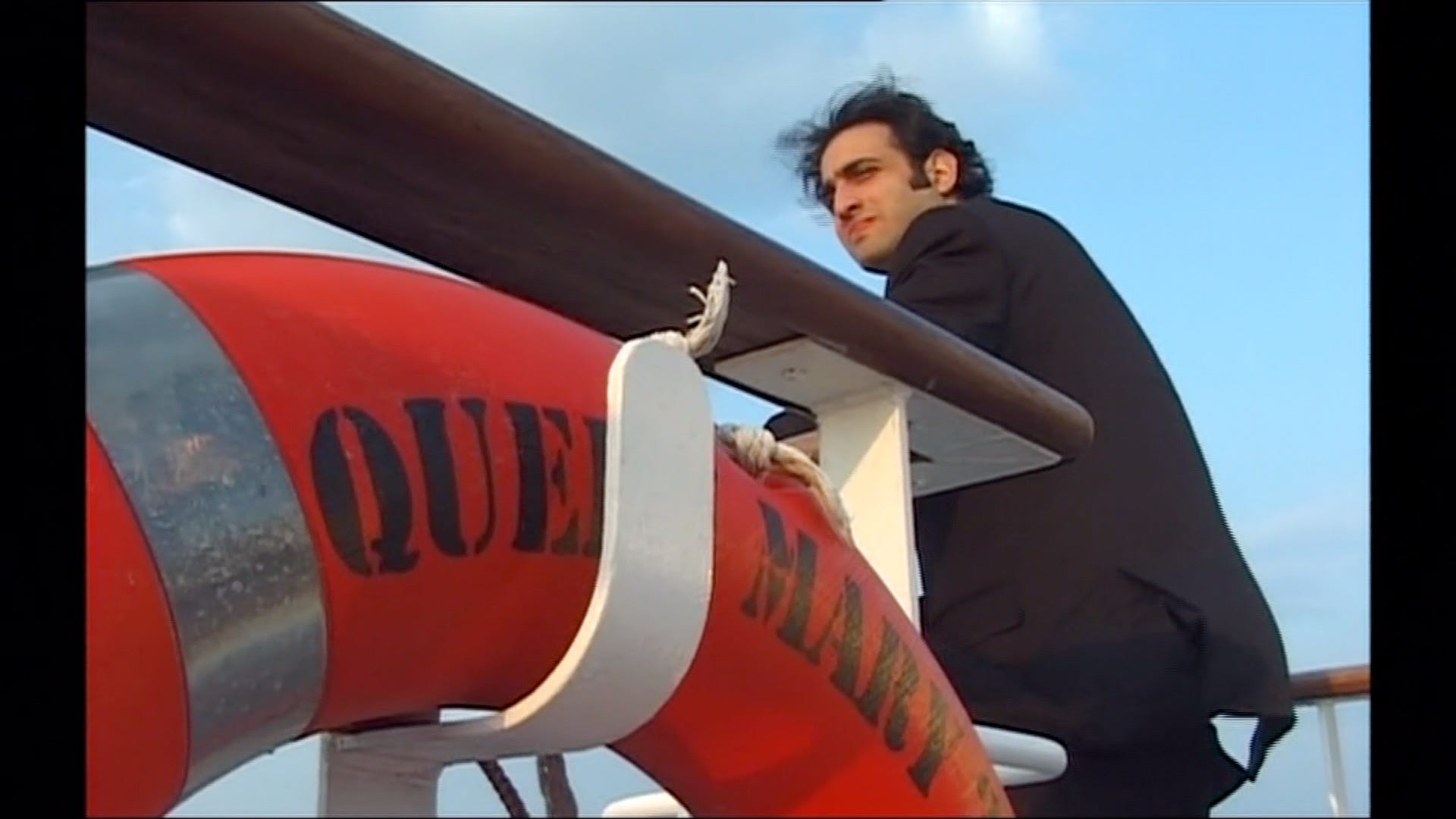
I film everything, of course, getting shots of the ship, the band, the opulence and, usefully, the safety briefing.
Once at sea, we investigate our cabin. Tim opens the bathroom door. It’s a moment of truth. It could be completely different to the one we saw on dry land in Poland...but it’s not.
It’s identical.
Only now do we know for sure that the Polish manufacturer wasn’t stringing us along.
Tim takes a piece of the bathroom sink he was given in Gdansk and does a piece to camera, comparing it to the one in front of us.
And then we change for dinner.
...which is a somewhat surreal experience.
We’re at a shared table of 12 or so guests, all retirees, all couples, mostly affluent Americans. To say we stick out like a sore thumb is an understatement. I honestly don’t know what they make of us. They probably assume we’re gay. Which is fine. But they also must wonder why we’re here. Tim and I struggle to make small talk about cruises (everyone at our table has travelled with Cunard extensively in the past). And we splutter a little over our fine wine when asked what we do for a living. Neither of us has come prepared with a backstory.
After the dessert course, in the best traditions of investigative journalism, we make our excuses and leave.
The next morning’s meal is buffet style, which we find easier to deal with, keeping ourselves to ourselves. We knock off a couple more pieces to camera, filming discreetly with my camcorder. I take a few more shots of the ship. I film opulent lifts going up and down; a man in the cocktail bar playing the piano.
We have ample material and could face another week on board.
And it’s incredibly boring.
This is a holiday that most people would give their right arm for but, I’ll admit it, I hate it.
Cruising really isn’t for me.
Tim is bored and tetchy too. And so we make plans to (literally) jump ship.
I face one more night of his snoring and we dock in Porto.
We take our luggage and our passports to the information desk on board and explain that we need to get home. Again, we haven’t really planned what to say. I think Tim talks about a family emergency and I blurt out something about not feeling well. We’re not sure if we’re even ‘allowed’ to leave...but they can’t stop us, can they?
So as other passengers disembark for a day tour of Portugal’s second city, we head down the gangplank, wheeling our suitcases and depart the Queen Mary II for good. I wonder briefly what our dinner companions will make of it when there are two empty places at the table that evening.
I happen to have a good friend who lives in Porto, who picks us up at the port and drives us into town. We check into a hotel and have a much more relaxed dinner, with beer, recounting the whole bizarre experience. And next day we’re on a budget flight back to Stansted.
Back in London and with the shots we need in the can, we get down to the slightly more serious business of putting in ‘right of reply’ calls. The experts in Warrington have put us in touch with senior figures at the Maritime and Coastguard Agency who are, it’s fair to say, surprised and horrified at our findings. They agree to investigate immediately and, with his permission, we pass on details of the Czech whistleblower. Somewhat predictably, Alstom and Cunard both won’t give interviews but issue statements instead.
For a day or two, it looks like the MCA will order a complete refit of all of the bathrooms on board, a huge story that would lead to several months of cancelled holidays and cost Alstom and Cunard millions.
We’re sitting on a huge story.
The Agency sends its own experts out to meet the ship, which is now in New York, carrying out its own independent tests on the flammability of the bathrooms. They agree that the plastic “does not fully meet fire regulation standards” and spend several days working out what to do. The ship makes its way back to the UK, and is due to dock in Southampton when we run the story.
In the end, the MCA decides that a complete refit isn’t necessary, but demands the installation of 1300 additional smoke detectors – one for every cabin on board. There will also be an increase in fire patrols carried out throughout the night by the ship’s crew until additional sprinklers can be fitted. Each passenger on board receives a letter from Cunard reassuring them that the ship is safe. It’s probably a fair compromise, but Tim and I are a little disappointed.
We break the story on the Six O’clock News a few days later – Tim in the studio and another colleague, Robert Hall, despatched to stand dock side in Southampton, where the ship is due to dock for its refit.
Interestingly, when the story goes out, many Cunard customers criticise us for ‘targeting’ such a great British institution. “I went on a cruise and the bathrooms looked perfectly safe to me,” writes one passenger. Another accuses the BBC of making “a mountain out of a molehill”.
I despair, reading this.
Stories like this are important.
Not because the Queen Mary II was a disaster waiting to happen – it probably wasn’t.
But safety rules and regulations are there for a reason.
And if we allow big companies to cut corners, break the rules, cut costs, where do we end up?
You only have to think of Grenfell Tower as an example.
So I’m proud of this story. It’s a great example of how a simple tip can lead to a cracking investigation. And it has given me some wonderful stories to tell about a black tie dinner on a swanky cruise ship.
Great story!