
Scamming the Scammers
The stories that keep coming back

Welcome to ‘People I’ve Shot’. I’m Tony Smith and these are weekly stories from my 30 year career as a video journalist with BBC News. This week - tales of exposing online scammers and fraudsters. And how our journalism doesn’t always make the difference we hope for.
I’m standing in an unremarkable square somewhere in the back streets of Malaga, Spain, waiting to meet a man who runs an orphanage in Haiti. I’m here to give him my grandmother’s jewellery. My grandmother has recently passed away. She always wanted her worldly goods to be used for good.
Much of that isn’t true of course.
But I’ll come to that.
We, as journalists, like to think we’re going to change the world.
We tell contributors that speaking to us could ‘make a difference’.
Sometimes it does, of course.
But mostly, we’re a little delusional about this.
After many years at the sharp end of original and investigative journalism at the BBC, I came to the conclusion that this work often doesn’t really change anything. In reality, it can be as much about entertainment and curiosity as public service.
My evidence? The fact that the same stories come round time and time again.
Scammers.
I loathe scammers. There’s something inherently cruel about using trickery to take advantage of and manipulate the vulnerable.
Over the years, I’ve done more stories on scammers than I care to remember, every time wanting to believe that this might ‘raise awareness’ or encourage the authorities to ‘clamp down’.
I’m prompted to write this by a report running this week by a former colleague, Tom Symonds. Tom’s been out with the City of London Police covering a new unit promising to take down predominantly West African romance scammers. It sounds like they’ve made some progress with dozens of arrests.
But I covered the exact same story, with another promised crackdown, many years ago.
And nothing has changed.
At that time, I made contact with a Dutch investigator who had somehow infiltrated the emails of a Nigerian criminal gang. Frank Engelsman was an interesting character with a mysterious background, a private investigator specialising in Nigerian fraudsters. Over a coffee in Amsterdam, he showed me how the gangs operate.
It was fascinating.
Rather than emailing or messaging one fraudster, the victim is often unknowingly communicating with a whole coordinated network of different criminals. First off, they’ll be ensnared into the scam. With romance scams, a lonely, often middle-aged woman will be enticed into an online relationship with a fake social media profile. The profile pictures are stolen images (though these days they’ll probably be using AI to create entirely fake identities), something like an American serviceman stationed overseas. An accident or mishap of some kind will befall the serviceman who asks for a small amount of money to be wired by Western Union. It sounds implausible and it’s easy to judge the victims for being naive and foolish... but love is a funny thing, right?
Once the victim has paid once, their details will be passed on to a second gang member who will try to fleece them of more money. They’ll be told the first payment didn’t go through and a further small payment is required to release the funds from a bank. Eventually the victim will smell a rat and cease paying. Their details will then be passed on to another member of the gang, who’ll pretend to be a police officer investigating the case, promising that their lost money can be returned. It just needs a small payment to request more information from the bank. And so it goes on.
Engelsman took me to a district near Schiphol Airport where gang members have been known to rent serviced offices, pretending to be an actual bank. Victims have been known to travel to Amsterdam to make further payments at these fake banks, convinced they’ll release money or retrieve their losses... only to find those losses accumulating further.
The detailed correspondence that Engelsman had infiltrated allowed us to identify victims across Europe. Tentatively, we contacted them to try to arrange interviews. Frustratingly, many didn’t want to engage – continuing to believe the ongoing correspondence that their money could be returned, still in the thrall of the gang. In the end, I travelled to Athens to film an interview with one victim, who’d lost hundreds of thousands of pounds.
With Engelsman’s help, we tracked down some of the criminals themselves.
These crimes have their origins in Nigeria, where they even have their own name. ‘419’ is the number on the Nigerian criminal code referring to online deception and fraud, and so the crime is simply referred to as ‘419’.
It’s the same crooks who send out those emails purporting to be from an African prince with millions of dollars hidden in a secret bank account - just needing your help to release the cash or gold bullion. Unbelievably, many people fell for that one too.
The common misconception is that these criminals are all based in West Africa. But Engelsman told me that’s not always the case. The Nigerian diaspora is extensive and Engelsman’s documents identified some of those behind the anonymous emails hailing from the Nigerian community in London.
One of those involved was a man running an internet cafe on the South Circular. With reporter Anna Adams, we doorstepped him. It was another one of those assignments that needed a lengthy risk assessment and security advisor (Oleg at my side once again). But we all came away safely.
A few years later and the story came round again.
Almost identical, this time with colleague Angus Crawford we interviewed a victim of a romance scam. And tracked down the perpetrator. This time he was in Lagos, rather than Lewisham...and so we were left shouting down a phone line rather than confronting him in person.
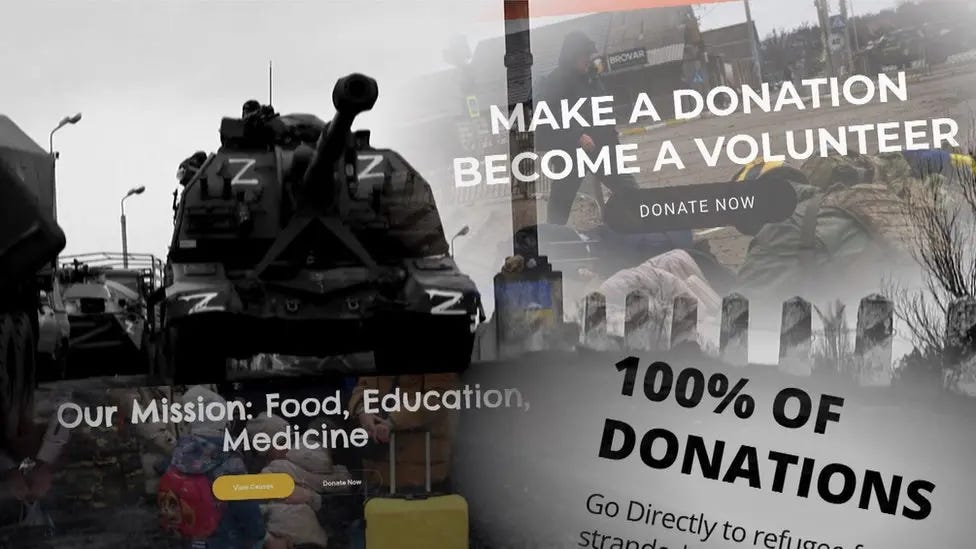
In 2022, we uncovered scammers posing as charities trying to help victims of the Ukraine war. We found the logo and branding of the charity Save the Children had been stolen and used to create a fake website. “The generosity of the British public is being taken advantage of,” the charity told us. And once again, we couldn’t confront the scammer in person but managed to challenge an anonymous voice, somewhere in West Africa, on the phone.
But that’s not a new story either.
Remember what I said about stories coming around again and again… and again?
Turn the clock back to 2010.
It’s a few months after the devastating Haiti earthquake and a whole load of fake accounts have appeared on social media purporting to be orphanages or NGOs desperate for donations. There are some extraordinary sob stories. And this time, it’s the charity SOS Children that has had it’s images stolen and abused.
We get in touch with the scammers, keen to donate. I probably overplay how hopeless and heartbroken I’m feeling in the email exchange, but they’ve smelt money and don’t notice.
They steer us towards a Western Union transfer, which would be entirely anonymous (these days it would be cryptocurrency or bitcoin). I don’t know whether this tactic would work, but I come up with an idea. My grandmother has recently passed away, leaving me some jewellery in her will. I don’t quite know what to do with it. I’ve had it valued at about £3,000 but don’t think I’d get a very good deal selling it. Could I send it to the orphanage for them to take care of? It seems far-fetched, but it’s worth a go.
Behind the scenes, of course, the criminal network goes into action.
Ping. I get an email back.
“We don’t have an office in Haiti that could deal with this”, it says. “But you could send your generous donation to our partner charity in Spain.”
We ask for the address. They give us a PO Box of some kind. We tell them our courier won’t send valuables to a post office box. They give us an actual address. It’s the early days of Google Maps and Google Earth, but a bit of research locates it: a run-down looking apartment block on a piazza in the back streets of Malaga.
We book flights.
That’s how I find myself, camera hidden in a bag, waiting to hand over the “jewels”. The jewels are actually an empty shoebox, wrapped up to look like a DHL delivery. Our security advisor is dressed as a courier, waiting to hand it over. I’m sat nearby on a bench with reporter Razia Iqbal, my camera hidden in a bag at my feet.
The actual address they’ve given us, the block of flats on the square, is fake. The apartment number in question doesn’t exist. But we do have a phone number. So we’ve called it, saying we have a delivery that needs to be signed for. We know that, somewhere above us, from the balconies festooned with washing and laundry, someone has probably looked down, checking out our ‘courier’. The man on the end of the line says he’ll come down.
A minute later and he’s there, a ragged-looking West African (no surprise there) who’s in a hurry to take our parcel and leave. The BBC’s security man, posing as a DHL delivery driver, asks him for identification. The parcel needs to be signed for.
I spring into action.
But he’s fast.
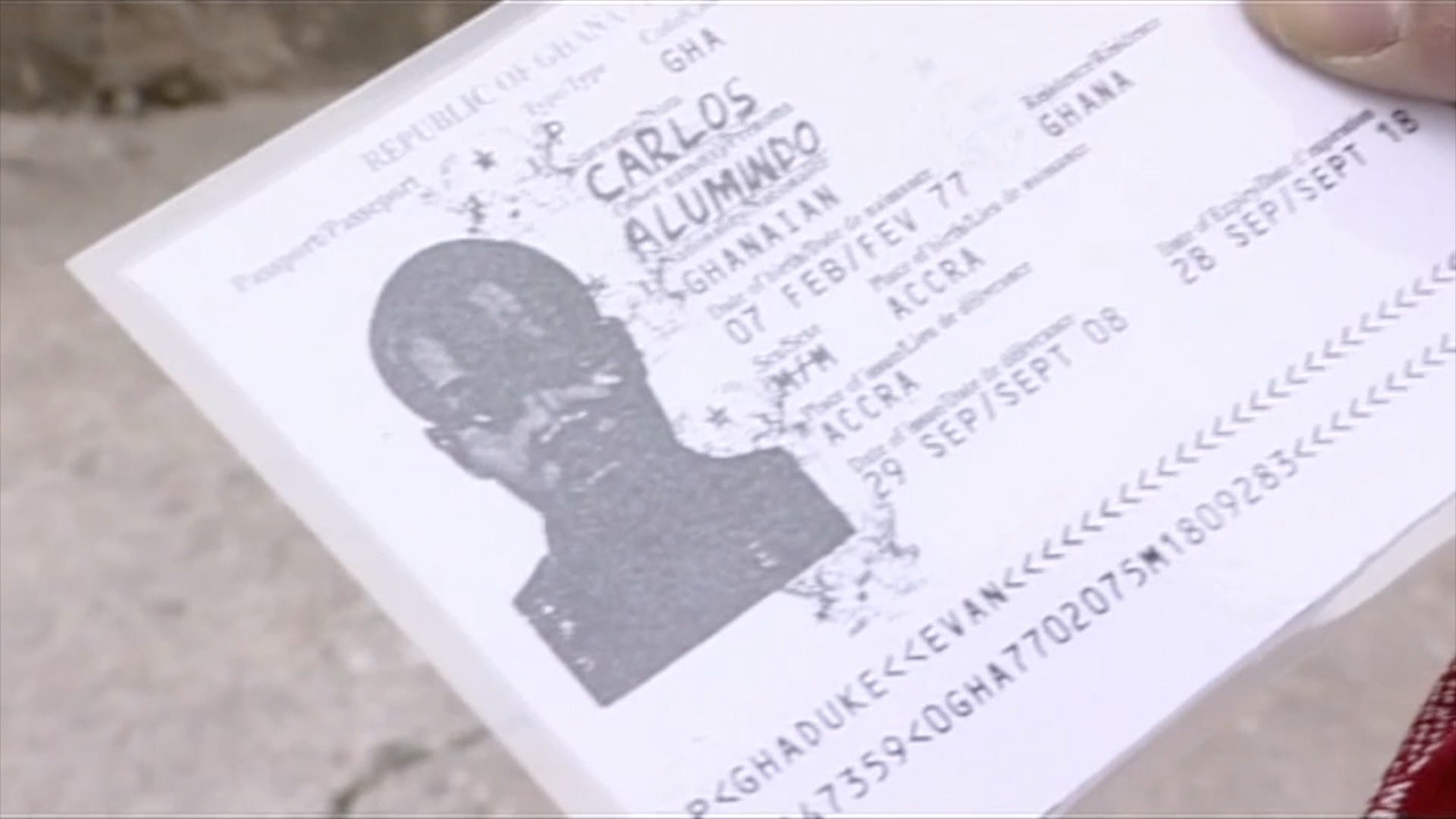
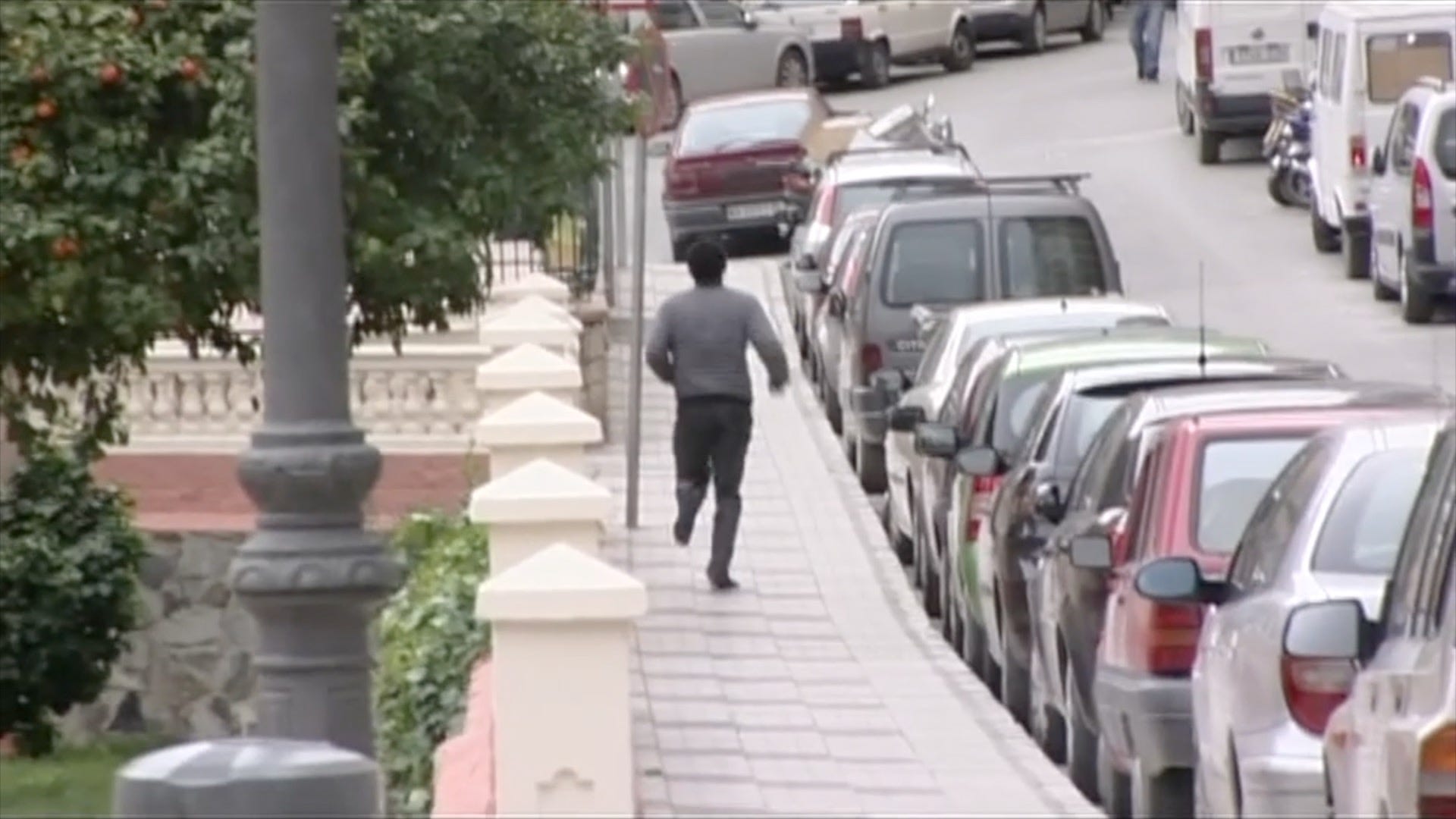
He sees me, turns on his heel and runs. We sprint after him, but he’s already halfway up the road. In an instant, he’s gone, disappearing into the Spanish back streets. In haste he drops his coat and a pair of flip-flops. In the coat, we find an ID, an obviously falsified, photocopied Ghanaian passport page, so bad it would fool no one.
Razia knocks off a quick piece to camera and we head home.
Does it change the world?
Absolutely not. The very same kind of scam continues today.
Has it forced Facebook and others to have more diligence over their advertisers? No.
Have the police been given more resources to tackle online fraud? Doubtful. Fraud is currently the most common crime in Britain, yet policing resources remain heavily focused elsewhere.
Does confronting these criminals make good TV? Absolutely.