
The Laura I Know
Life on the road with the BBC's Political Editor

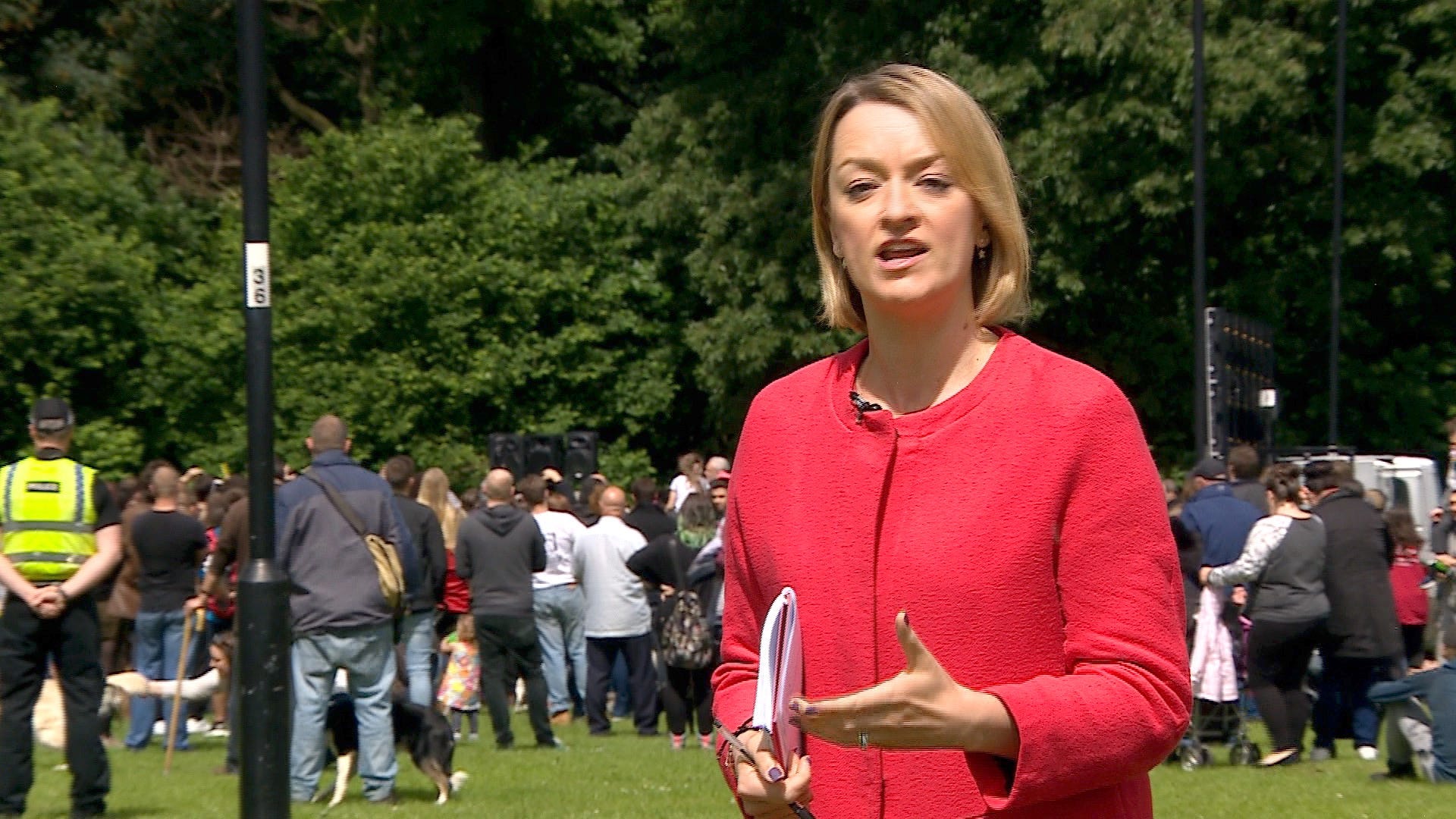
I’m Tony Smith and this is ‘People I’ve Shot’, weekly (ish) ramblings from the world of BBC News, where I worked as a video journalist for 30 years. We have a new Prime Minister - and that’s an opportunity to dig into political coverage. And a side of the BBC’s former political editor that most people don’t get to see.
British elections always seem to kick off in Cornwall.
It’s because it’s the ‘end of the line’.
In the Midlands or North, a day’s campaigning can reach scores of constituencies. Cornwall has just a handful of seats, not enough to sway the overall poll either way. And it takes so long to get here, for most politicians it’s just not worth investing the time.
So at the start of a campaign, a Prime Minister typically turns up once, ticks off Cornwall, and is never seen again.
Rishi Sunak came on the sleeper train in 2024, visiting the Great Western Railway maintenance yard in Penzance (quite literally, the end of the line).
Boris Johnson famously began the Brexit campaign brandishing a pasty in a Truro square (I was there to film said pasty).
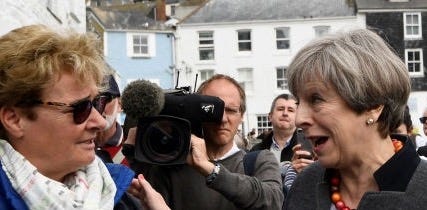
And Theresa May sounded the starting gun on her ill-advised 2017 poll, scoffing fish and chips in the little fishing village of Mevagissey. I was there too, alongside the BBC’s then Political Editor, Laura Kuenssberg.
And now, a confession.
I like Laura Kuenssberg.
Readers might immediately judge me for that line alone. You’ll have made your mind up about Laura many years ago.
Some loathe her. But that’s unfair. Hear me out.
I covered two elections and the Brexit campaign working alongside Laura K, as she’s known in Broadcasting House. I’ve written already about Brexit, so this is a post about filming elections. But it’s as much about the person as the politics.
Laura is tenacious, driven and unscrupulously fair.
Let me give you a flavour.
It’s a rainy day in 2017 and we start in West London, filming Boris Johnson introducing Prime Minister Theresa May at an election rally. We jump on board May’s battle bus, film her at work with prime ministerial red boxes as we shuttle to the next engagement. Then there’s a big set-piece interview. Other crews handle that so I can grab the camera cards and get on the road. We head to the Midlands where Jeremy Corbyn is holding a rally. We board Corbyn’s bus and knock off an interview. Vox pops, colour shots. And an all important piece-to-camera as Corbyn strides past us.
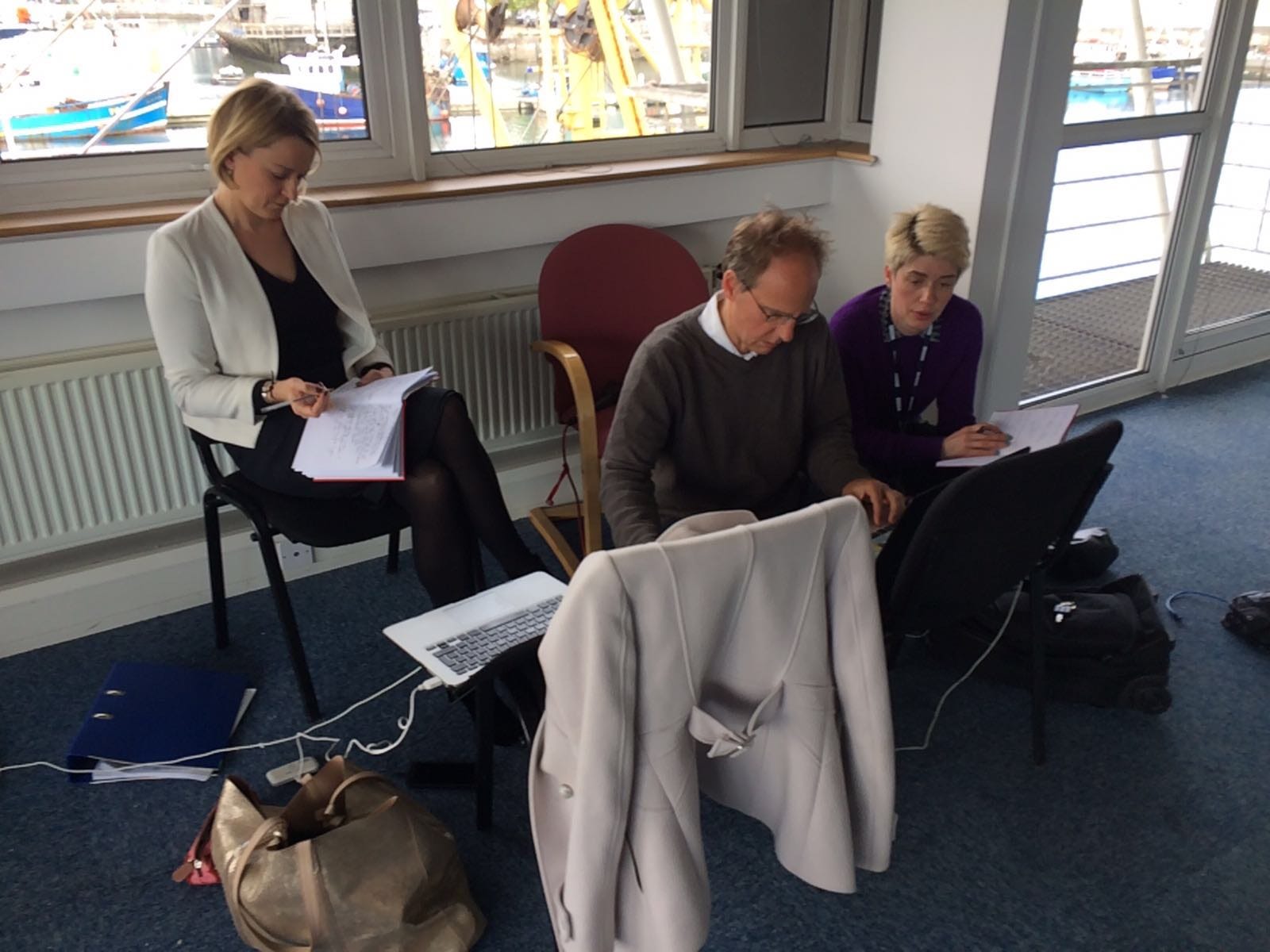
It’s on days like these that the Political Editor’s producers earn their money, juggling numerous crews on the ground and sourcing footage from elsewhere. They’re on the phone to colleagues at base and around the country. For balance, we have to include the Lib Dems, UKIP, the Scottish and Welsh nationalists. This footage is clipped into small manageable chunks and sent to me over 4G or Wi-Fi, my laptop fan screaming as I edit on one screen while simultaneously downloading material on another. Meanwhile Laura is working away on an online or radio piece beside me.
The trick is to try to stay one step ahead.
So I’ll digitise material in the back of the car, feeling vaguely nauseous, intently focused on a laptop screen while travelling between locations. When filming an interview, I’ll anticipate in my head the answers we’re likely to need in the edit, isolating them in advance. We edit in all sorts of strange places: hotel rooms, carparks, conference rooms or speech venues when everyone else has packed up and left. For three weeks on an election campaign trail, we’ll be doing the lead story on the Six O’Clock News most evenings, usually editing up to the wire and feeding at the very last minute.
It can be frantic, seat-of-the-pants stuff. On one occasion I’m editing in the back seat of a car somewhere in the Midlands as we race towards a live location. As we come off a motorway slip road we hit a monumental traffic jam, but we need to reach the BBC’s satellite vehicle in order to feed our story (the lead item on that evening’s bulletin, on air in literally twenty minutes). In the end we decamp from the car and race down the hard shoulder on foot, just making it on time.
It’s huge pressure, but also huge fun.
Before standing down to be replaced by Chris Mason, Laura worked at this level for seven years, her days routinely stretching from the Today programme at 7am through to the Ten O’Clock News. I’ve also now passed the baton - an awesome colleague named Jack Slater now works alongside Chris.
The political agenda during those seven years was relentless, but Laura’s enthusiasm rarely faltered. And that drive and determination genuinely got the best from the teams around her. It’s not just me saying this. Most of the producers and crews who’ve worked closely with her would agree.
We were a close knit team. We worked hard, played hard. When energy waned, Laura somehow kept us going, unflinchingly professional while also huge fun to work alongside.
Yes, Laura is paid a lot of money (her salary is among those published in the BBC’s annual report, just this week).
But she’s one of the few BBC News stars who hasn’t sought to bolster income with lucrative outside speaking engagements. Remember the controversy over Clive Myrie failing to declare £145,000 in outside earnings? Laura doesn’t do those outside jobs, as far as I’m aware. You’ll find all outside earnings for BBC stars here. The list features a whole host of famous names who supplement their salaries with outside gigs, but not Laura.
I recall having dinner with a bunch of BBC folk in a European city after covering a G7 summit. Another well-known BBC editor was urging Laura (somewhat mansplaining, to be honest) to get an agent, write a book and ‘milk’ her celebrity for all it was worth. Laura wasn’t interested. He flew back on the PM’s plane demanding an expensive Business Class seat. Laura and our team travelled back on British Airways, in economy.
So yes, I like and respect Laura.
And I find the loathsome, abusive and vile comments she sometimes receives on social media deeply shocking. Thankfully, she’s learnt to be thick-skinned.
But those words matter.
In 2017 they turned into genuine hostility, mostly from those on the left who felt she wasn’t giving Jeremy Corbyn a fair hearing. I worked with Laura during those years and I can tell you she prepared for interviews with Tories, Lib Dems and UKIP (the early incarnation of Reform and the Brexit Party) with equal diligence, challenging their leaders with equal rigour.
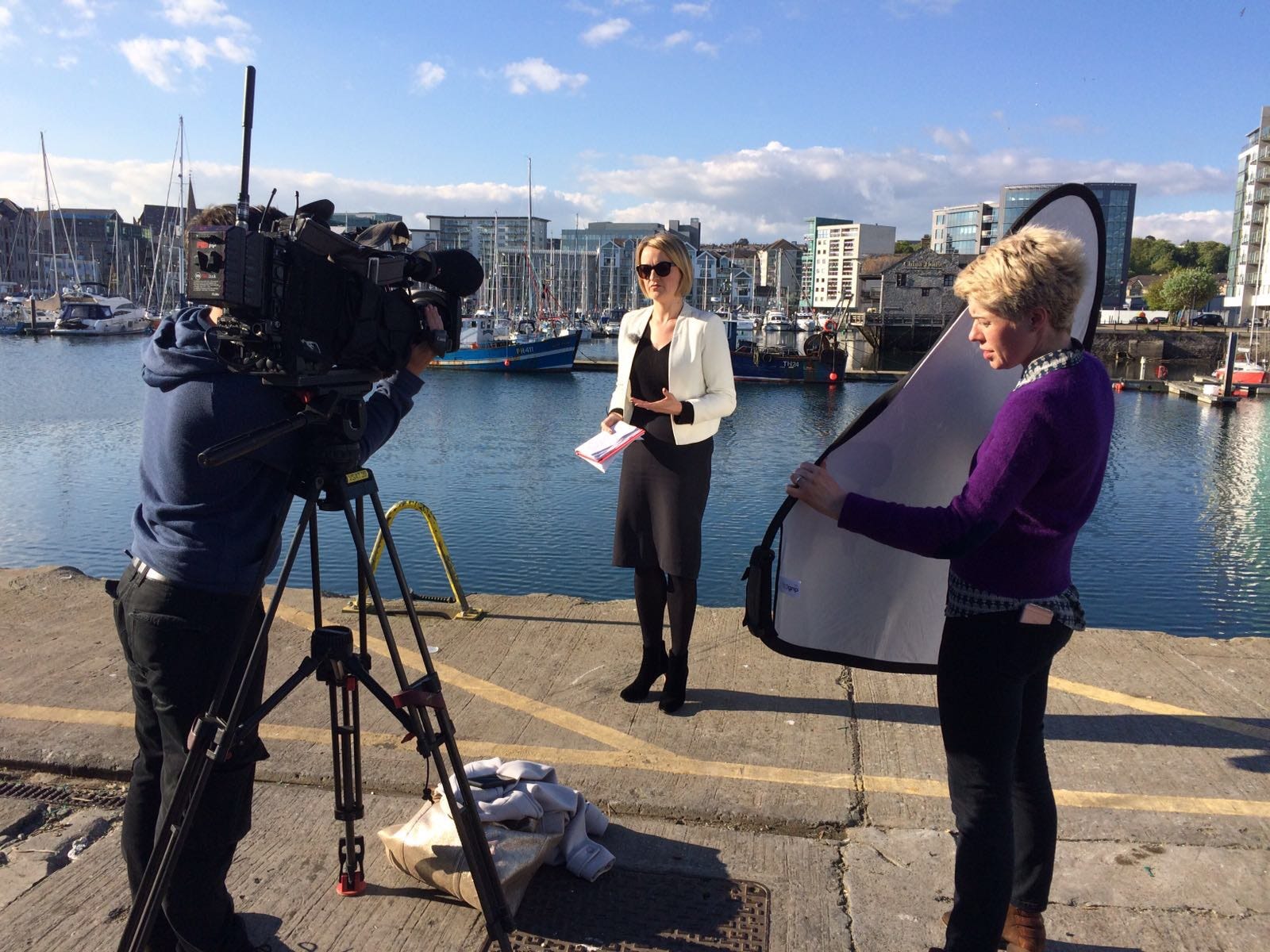
It’s May of that year and I’m filming with Laura in Wrexham, where Theresa May is scheduled to give a speech. There’s a brief moment of excitement outside as a lone protester is bundled away by police, but then we settle into position to watch the speech itself. Nothing controversial is expected, but May unexpectedly announces a U-turn on one of her key manifesto commitments on social care, reversing a planned policy which her opponents have dubbed the ‘dementia tax’.
It’s suddenly a huge story and Laura springs into action.
May, clearly rattled by Laura’s questioning, jumps in her car and leaves. No one now knows what the Conservative position is on social care. Laura spots Conservative Welsh Secretary Alun Cairns, and chases after him, shouting questions. Cairns runs away, disappearing into a doorway and locking himself in. We follow, Laura determined as ever. The final edit has us pursuing Cairns around the building trying to get answers.
Is this really the work of someone biased in favour of the Conservatives?
But Twitter had made its mind up that Laura is a Tory stooge, and the animosity grows.
Eventually, the threats against her become so serious that our bosses assign a personal protection officer, ex-military, to our team. He doesn’t have much to do, but is a decent guy and a very useful tripod carrier for me.
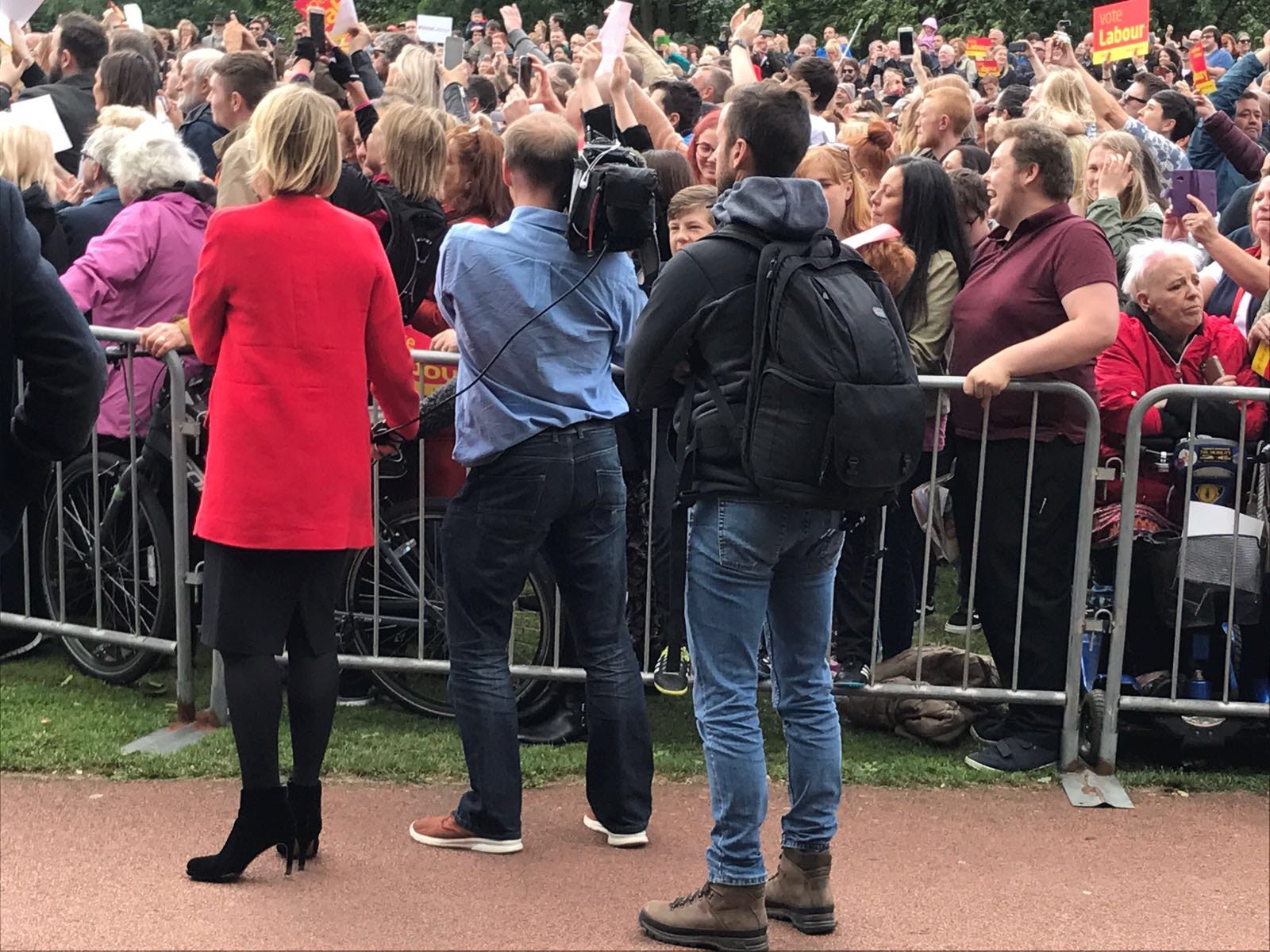
So why is it that, among some sections of the audience, Laura appears to be so unpopular?
I have a theory, and it is this: because she became so well known reporting politics, she somehow came to represent the ‘establishment’.
Jeremy Corbyn tried to break the mould of British politics. So when Laura challenged him on the realities of what a Corbyn government could deliver, the trolls on Twitter were incensed. Farage also paints himself as anti-establishment and I suspect that few Reform voters have much time for Laura K either.
There’s also the fact that she’s a woman.
Would a male Political Editor have been on the receiving end of so much abuse?
Probably not. I worked with Nick Robinson before Laura and, while he came from a well-known Conservative background, the attacks on Twitter were less personal and vitriolic.
As the father of two girls, I’ve always been impressed by how Laura gets on with the job despite the misogynistic abuse.
I remember filming an interview she carried out with Theresa May, then Home Secretary, inside a wood-panelled office deep in the Palace of Westminster. After the interview was done, Laura and May continued chatting and I moved around the room filming cutaway shots that we’d use for editing. These are traditionally shots of the reporter nodding or listening, but in recent times camera crews have attempted to be more creative.
I briefly filmed the two women’s shoes facing each other beneath May’s desk. You’ll remember the former Home Secretary made headlines for her leopard-print high heels.
Afterwards in the edit, Laura was incensed.
“We are not using that shoe shot,” she said (possibly with expletive thrown in). “You’d never focus on what footwear a man was wearing.”
Fair point.
Suitably chastised, I deleted the shot.
Laura is also one of the best television packagers I’ve ever worked with. It is a privilege, she once told me, to be ‘in’ people’s living rooms. “Every word of my script and every shot from your camera needs to be meaningful”. Good advice for anyone aspiring to work in TV.
A more decent, compassionate colleague I don’t think you’ll find. I recall being with her in an edit suite in Leeds when the news of Jo Cox’s murder began to filter through. Visibly shaken she dashed back to London, conscious of the enormity of this moment in British political life.
That’s not to say she doesn’t have her faults.
She and our bosses were perhaps guilty of misjudging the mood of the nation when it came to Brexit. She likes to refer to Westminster as ‘this place’, the phrase given to Parliament by its parliamentarians. To me, that feels a little cliquey, very much the language of an insider in the Westminster world.
Another former colleague, Nick Bryant, wrote recently about our coverage of politics turning into a kind of hysterical, fast-paced entertainment which might even undermine democracy.
Fiercely competitive, Laura probably contributes to this as much as anyone, with every interview looking for a new ‘line’ that will move the story on.
Thus, political interviews have become all about ‘point scoring’. And Laura is very good at scoring those points.
It makes politicians unable to get anything done, for fear of a backlash from the papers (take the U-turn over the means testing of the winter fuel payment, for example).
Of course every political journalist does the same - creating an atmosphere where politicians fight to fill ‘the grid’ with policy announcements, terrified that any void will bring negative coverage. That’s not necessarily healthy for our democracy when the day to day business of getting things done in government can be slow and cumbersome (and involve taking decisions that aren’t popular in the short term, but might be what the country needs in the longer term).
And there are those ‘gotcha’ questions, pushing the interviewee into a corner where they’re left with no wiggle room but for the prospect of a U-turn. ‘Will you stick to the fiscal rules?’ Of course it’s impossible to answer with a glib “I’m not sure - we’re going to see how things go.”
Every one of Laura’s interviews is meticulously researched, and that research includes inquisitions of this kind - questions that may eventually come back to bite the recipient. In fact she famously had to withdraw from a Boris Johnson interview having inadvertently texted him the detail of her planned questions. In all honestly, I can’t think of many who would openly fess-up to such a blunder.
It’s perhaps telling then, that I find Andy Burnham being interviewed by Gary Lineker this week rather than on Sunday with Laura Kuenssberg. Burnham is deliberately trying to do things differently (some would say avoid proper scrutiny). Will it work? We’ll see.
So back to anecdotes of working with Laura.
It’s midnight in a deserted square in the Italian city of Florence.
I’ve just packed up after filming lives for the Ten O’Clock News back at home. Theresa May has been visiting, making a pivotal speech during Brexit negotiations.
I’m standing next to a tripod, camera and flight cases, waiting for a taxi.
It appears and we can’t quite believe it.
A little Italian minivan bedecked in fairy lights, glitter balls and flashing lights. For some reason, the receptionist at a nearby hotel has called us the city’s comedy tourist cab. Music blasts across the piazza as it draws near.
We’re exhausted and, probably for that reason alone, see the funny side, climbing in, laughing hysterically and singing karaoke all the way back to the hotel where we’re staying.
The moment sticks with me, not because of the assignment but because of the team I’m with.
Good television is made by great teams.
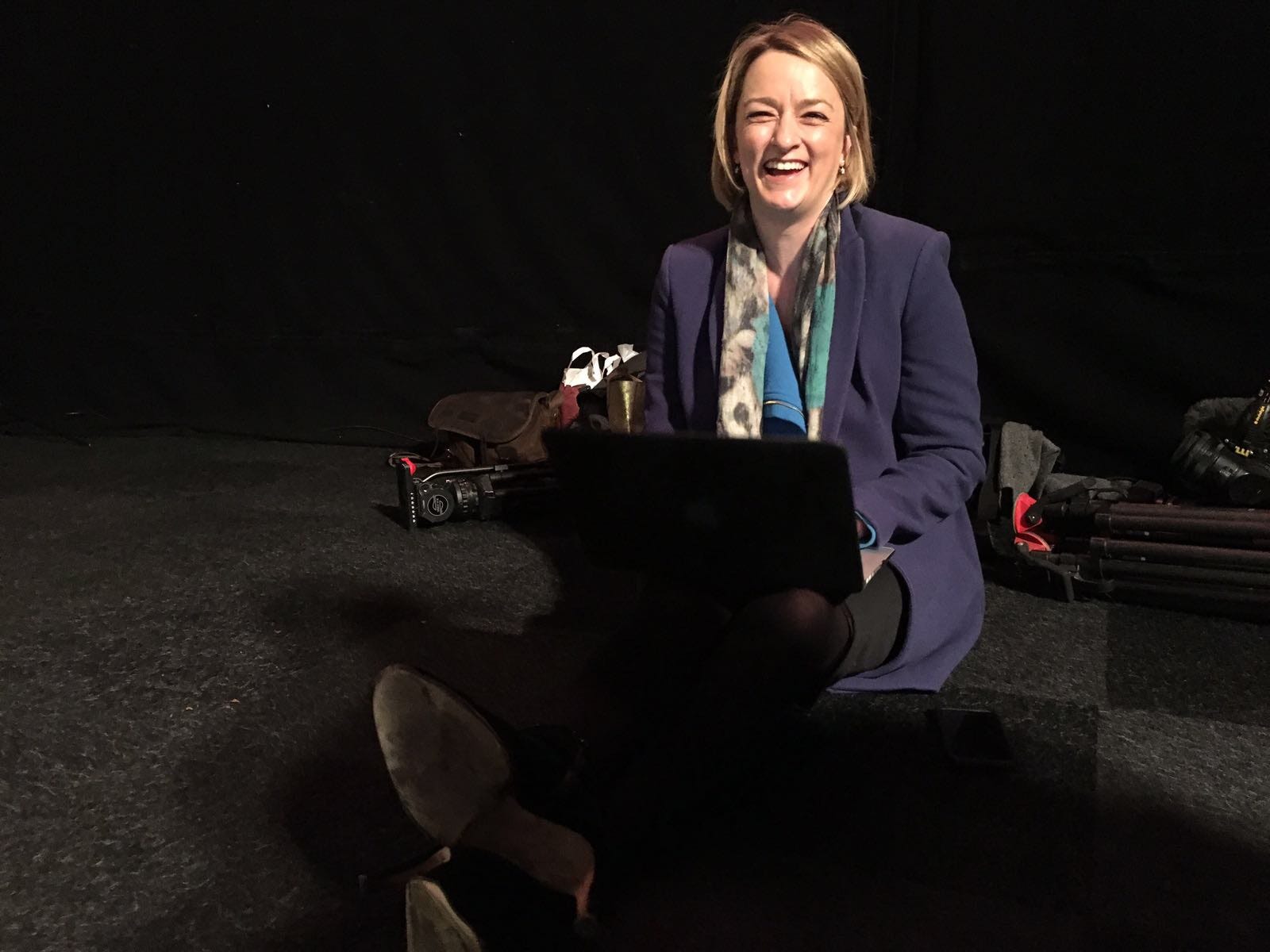
We stumble out of the cab in hysterics, still singing ABBA, and head for the hotel bar.
Laura picks up the tab for several bottles of wine which can’t be claimed on expenses. We drink late into the night, nursing sore heads for the flight home the next morning.
It’s a side of Laura K that most people don’t see.
When she moved on from being Political Editor, I asked what she planned to do next.
She didn’t know (this was before her Sunday morning TV show had been commissioned).
I wondered if she’d consider Strictly.
No chance, she said.
It’s a shame.
Others would get to see the Laura K I know.
And she’d probably win.
Yup, super hardworking, without ego and a good laugh. Not many of them around at Laura’s level.
A good read, thankyou